Five-Year Financial Projections in U.S. Immigration Business Plans
Learn how accurate five-year financial projections strengthen EB-2 NIW and E-2 visa business plans for U.S. immigration success.
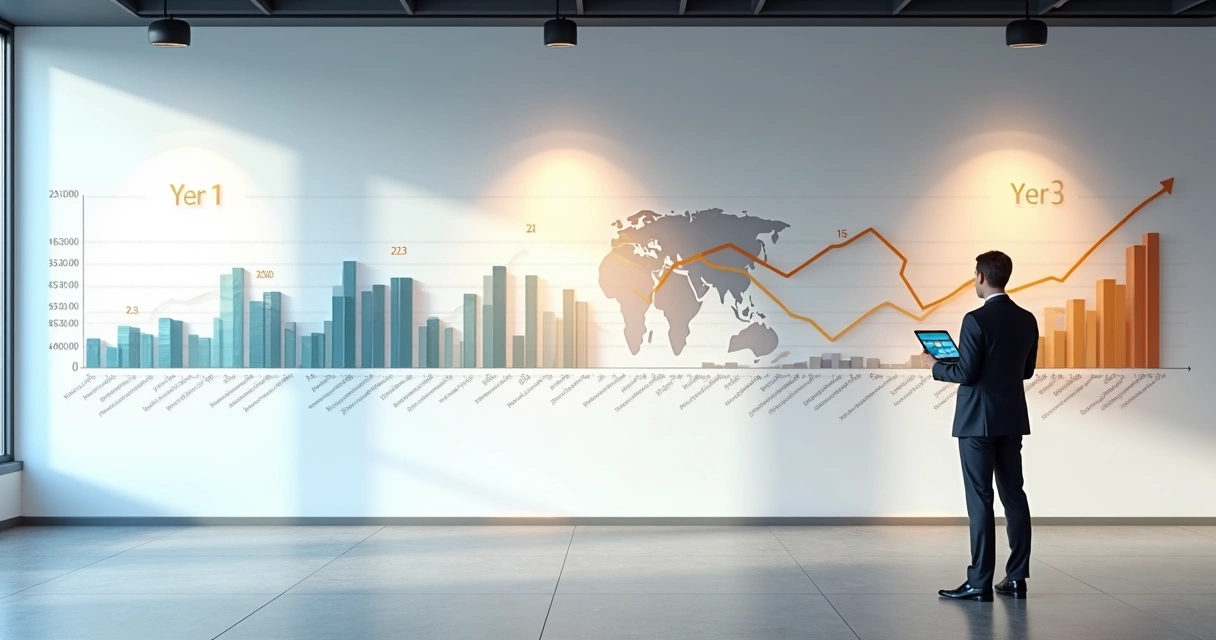
Preparing strong five-year forecasts in U.S. business immigration plans demands a thoughtful mix of data-driven analysis, creativity, and storytelling. For many, this process marks a turning point, where ambition shifts from private vision to formal, documented strategy, intended to convince officials that a project is both possible and promising.
At Seeder Visa Solutions, we have found that the financial plan is often the tipping point for approval or rejection of an entrepreneur’s U.S. immigration journey. The numbers in these plans must build trust, show expertise, and reflect honesty about market realities. In this guide, we share our experiences and the practical advice we rely on. You will find clear explanations, actionable tips, and up-to-date research on how to shape robust projections for EB-2 NIW, E-2, and related visa petitions.
Numbers aren’t just arithmetic, in immigration, they become your proof of vision.
The role of long-term financial forecasts in immigration business plans
Financial projections for five years are not just a formality. They create the backbone of your business narrative, and serve as concrete evidence that the plan has substance, not just hope. Whether an attorney, business owner, or international professional is seeking the EB-2 NIW or E-2 visa, well-designed forecasts offer what officials and adjudicators expect: a tangible road map to success, risk readiness, and economic benefit to the United States.
According to studies from the Johns Hopkins University, immigration is deeply tied to U.S. labor markets and economic growth. Experts forecast macroeconomic impacts when immigration flows change, directly influencing opportunities for new businesses and employment in the U.S. (Johns Hopkins University research). When we draft financial projections for immigration, we keep this context in mind: success stories strengthen not only the petition but the broader U.S. economic story.
Why do adjudicators care about five-year projections?
- They measure feasibility. Projections show if a business has a chance to sustain itself, grow, and survive challenges.
They link to the economic impact. For categories like EB-2 NIW and E-2, a key requirement is showing new value, job creation, or contributions to the U.S. economy.
They reflect the petitioner’s skill. Clear and logical forecasting shows that the applicant has business insight and planning ability, both are critical to approvals.
Seeder Visa Solutions places high value on developing plans that bring these aspects to the surface, relying on proven templates and bespoke adjustments for each client’s situation.
What’s unique about long-term forecasts for immigration?
Business plans built for immigration include segments rarely found in routine business loan applications or internal strategic forecasts:
-
Linking personal biography and technical skill with business numbers. You must connect the dots between your own qualifications and the financial milestones in the forecast.
-
Stating explicit ties to U.S. job creation, innovation, or market needs. It isn’t enough to simply show profitability; authorities want to see broader benefit.
-
Tight alignment with regulatory requirements. Each visa category has specific expectations for what must be demonstrated, such as job creation thresholds (for E-2 and some EB categories), or national interest (for EB-2 NIW).
Understanding the five-year horizon
Some petitioners ask: Why five years? Why not three, or ten? U.S. immigration authorities prefer the five-year period because it balances detail and visibility. It is long enough to show sustained viability, but not so long that the numbers become pure guesswork.
Five years combines realism and vision in one timeline.
We encourage clients to use the five-year outlook as a map, the first 12-24 months must be specific and clear, while later years can show bigger strategic direction, scalability, or expansion plans. For E-2, the five-year plan addresses how an initial investment will create growth and jobs, turning a temporary project into a sustainable U.S. business.
The evolution of projections year by year
Throughout a five-year plan, the story usually shifts as follows:
- Year 1: Launch, setup, operating costs exceed early revenue.
- Year 2: Business gains traction, revenue grows, fixed costs remain high.
- Year 3: Break-even or profitability achieved, new hires or expansion begins.
- Year 4: Steady growth, improved margins, possibly new products or markets.
- Year 5: Maturity, stable cash flow, strong job numbers, or scale-up phase.
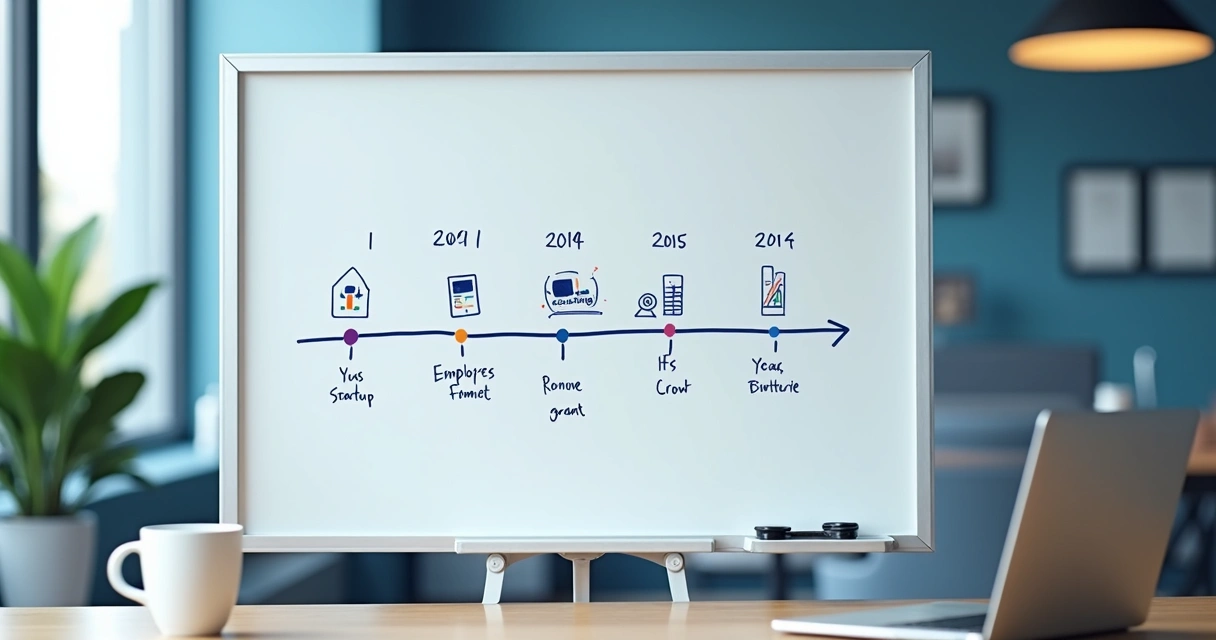
We advise clients to avoid “hockey-stick” growth scenarios in the forecast. Instead, we show a plausible trajectory, shaped by market research and grounded in reality. This is often what reviewers look for: substance over sensation.
Key components of a five-year projection
To build strong forecasts, Seeder Visa Solutions uses a foundational structure, then customizes it for each client based on industry, business type, and target visa. Core components include:
- Revenue and sales forecast
- Cost and expense breakdown
- Cash flow projections
- Gross and net profit estimates
- Balance sheet (assets, liabilities, equity)
- Job creation forecast
- Capital requirements (for E-2 or investor visas)
- Market and growth assumptions
Revenue and sales forecast
This is more than a guess or hope, it is a realistic, research-driven estimate of the sales the business expects to make each year. To do it right, we recommend:
- Defining core revenue streams (products, services, recurring, one-time).
- Tying each stream to a clear market and pricing model.
- Citing competitor pricing (without copying their names or data).
- Using industry benchmarks, when possible, to temper assumptions.
Every dollar forecasted must have a logical story behind it.
Expense breakdown
Adjudicators often focus on the cost side of the ledger. High expenses with low revenue set off alarms, as do forecasts that forget key costs like payroll taxes, insurance, or state licenses. Our standard template includes:
- Direct costs (for goods sold, materials, or labor)
- Fixed expenses (rent, utilities, insurance)
- Variable expenses (marketing, shipping, customer support)
- Hiring and payroll (with fringe and statutory costs included)
- Professional services and compliance costs
Seeder Visa Solutions often reviews several years of financial reports for similar industries to benchmark expense ratios, which improves credibility.
Cash flow predictions
Cash flow is about more than profit; it is about having the money to pay bills, hire staff, and manage tough months. Many businesses fail not because of a lack of profit but due to cash droughts in their first years. In our plans, cash flow forecasting is always done month-by-month for year one, then quarter-by-quarter for years two to five.

Profit calculations
Profit is the litmus test for business health. Our approach is to show gross profits after direct costs, then net profits after all operating and administrative expenses. We recommend stating both before- and after-tax numbers when possible.
Balance sheet overview
Including a simple balance sheet adds strength. It summarizes assets (cash, inventory, equipment), liabilities (loans, credit lines), and equity (owner investment) at year end. This is optional for E-2 but often useful for EB-2 NIW, showing that the business stands on firm financial ground.
Job creation forecasts and economic contribution
For visas requiring an economic benefit, such as E-2 and National Interest Waiver, employment projections matter a lot. Seeder Visa Solutions ties these to official U.S. data about labor and sector growth. Referencing forecasts like the Brookings Institution analysis and the Federal Reserve Bank of Dallas helps show alignment with expectations of job creation and retention (Brookings Institution analysis, Federal Reserve Bank of Dallas research).
- Projected roles, salaries, and planned hiring timeline
- Training programs or skills development (if relevant)
- Estimated tax payments or local investment
Job creation forecasts are not just about numbers; they are about people and impact.
Capital needs and investment
For investor visa categories like the E-2, the plan must make clear how much initial capital is required, where it will be used, and how it will sustain operations. This prevents misunderstandings and builds trust in viability.
Market and growth assumptions
Financial projections cannot float in isolation. They must be backed up by research. This includes market size, growth rates, trends in consumer behavior, and local or regional opportunities.

How financial projections strengthen immigration petitions
In our experience, the impact of a well-constructed five-year forecast goes beyond the numbers themselves. It provides tangible proof that the vision is possible, and that the petitioner has both the technical ability and understanding to succeed in a competitive U.S. landscape.
Supporting economic benefit
U.S. law and guidance frequently require that immigration plans demonstrate not only the viability of the venture, but clear, measurable benefit to the nation. We tie projections to:
- Job creation and retention, tied to evidence from labor studies
- Expected investment in local suppliers and professional services
- Anticipated tax revenues or economic multipliers from the operation
By referencing economic analysis, such as those completed by national institutions, we frame our clients’ projects as positive contributors to U.S. society. These details can be especially persuasive in the context of five-year financial projections for immigration.
Demonstrating feasibility and readiness
A strong forecast communicates much more than optimism. It shows readiness:
- Clear understanding of startup and operational costs
- Realistic assumptions on customer acquisition and market penetration
- Ability to manage risk and unexpected changes in the economic environment
Adjudicators trust forecasts backed by research, logic, and clear modeling, not just big numbers.
Linking business projections with petitioner biography
Seeder Visa Solutions integrates resumes, credentials, references, and track records with the numbers in the plan. When a plan shows projected growth in a field where the petitioner is already an expert, it becomes more believable. Our templates often show:
- How previous projects or businesses led to similar results
- How technical, scientific, or managerial skills are needed for each major phase
- Specific milestones that match experience or education
This approach is especially effective with EB-2 NIW petitions, where a technical or scientific background is vital.
Telling an authentic story with numbers
We often talk with clients about the storytelling power of their plan. A table of numbers can be cold, but a narrative that threads those numbers to lived experience and clear market research persuades adjudicators that something real is planned. Seeder Visa Solutions brings in case studies and authentic customer feedback (when available) to “humanize” the forecast.
Building solid long-term financial projections step by step
Here is how we approach the process for clients seeking EB-2 NIW, E-2, and related visas.
1. Gather and organize information
Every forecast starts with understanding the business model, sector, and intended U.S. market. We ask clients to gather:
-
Past financial results (if any): Even if only for a few months, real data shapes realistic assumptions.
-
Resumes, credentials, and project history: To show the team’s skill matches the plan’s ambition.
-
Market research and competitive analysis: Industry reports, customer data, and regional statistics provide backbone.
2. Map out cost structure and revenue streams
We identify all income types (product sales, service contracts, subscriptions, consulting, etc.), and match them to target markets. Each is backed by defensible pricing and volume assumptions.
3. Estimate startup and ramp-up expenses
We lay out every significant initial outlay: office or facility setup, equipment, legal or licensing fees, marketing, initial salaries, insurance. If permits or certifications are required, their timing and cost are included. Our checklist for E-2 applicants always includes franchise fees or intellectual property costs (if relevant), as these are often overlooked.

4. Formulate sales and marketing expenses
These deserve specific detail, especially for market-entry businesses. We show:
-
Advertising and promotion costs, by channel (digital, events, direct sales, PR)
-
Estimated customer acquisition cost (CAC): Supported by industry averages or pilot data.
-
Local adaptation, such as translation or regional branding: This often matters for immigrant-owned businesses expanding to the U.S.
5. Build headcount and payroll projections
We map out each role: timing of the first hire, wage rates, benefits, expected turnover, and even training. If regulatory requirements specify job creation (as for E-2), these assumptions must be detailed and well-documented.
6. Create month-by-month cash flow analysis
Year one deserves particular focus. Seeder Visa Solutions lays out incoming funds and outflows for every month, calling out potential “cash crunches” or periods with high burn rates. After year one, quarterly data is usually appropriate.
“Survive the first year; thrive in the fifth.”
7. Develop “what-if” scenarios
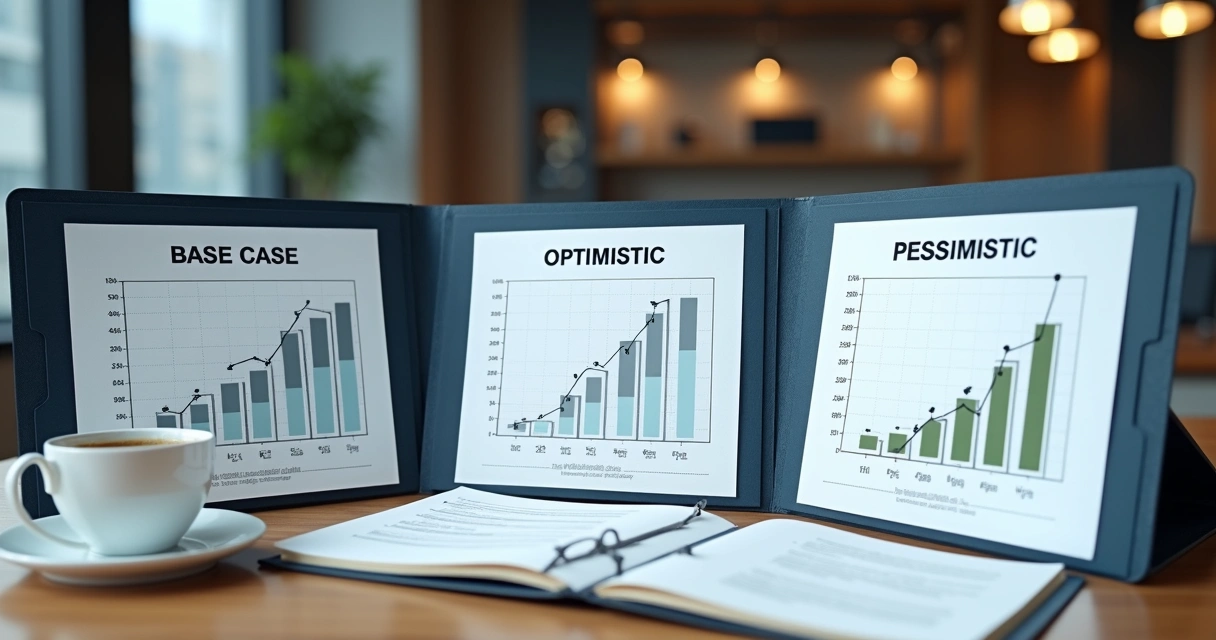
We encourage a conservative base-case, but often add two additional scenarios: optimistic (with higher sales or lower costs), and pessimistic (with delays or cost overruns). This gives decision-makers confidence that risks have been thought through.
8. Review, refine, and document assumptions
Every number must be backed by a rationale: for example, if year-two marketing spend is $60,000, it should connect to industry benchmarks or actual campaign quotes. Seeder Visa Solutions documents these in footnotes or appendices, which makes review easier and signals transparency.
9. Link data to U.S. economic impact
We use data from respected institutions to show how even small businesses contribute to local growth, tax base expansion, and employment, often referencing labor trends such as those reported by the Federal Reserve Bank of Dallas. This not only adds strength to the petition but frames the applicant as a partner to the U.S. economy.
Practical tips for aligning forecasts with business goals and market trends
Every financial forecast should stem from, and serve, the actual strategy for the enterprise.
Stay realistic, not just optimistic
It is better to show a modest, achievable growth trajectory than to promise exponential leaps unmatched by market data.
- Tie each revenue stream to actual customer segments and purchasing power.
- Avoid double-counting potential clients (for example, when a single large client might use two services).
- Cross-check assumptions with industry studies or publicly available market research.
Seeder Visa Solutions sometimes uses sensitivity analysis to test what happens if sales come in 80% or 120% of forecast. We find that showing this thinking in your business plan signals to adjudicators that you have thought beyond best-case scenarios.
Keep expense ratios in line with industry averages
Unusual expense ratios can trigger requests for clarification. We help clients find public benchmark data (trade associations, industry reports) so that costs for things like payroll, marketing, or rent look consistent. If your business is unique, we add a brief note explaining why expense ratios differ.
Document every assumption
All key numbers should be traceable to a source: market studies, vendor quotes, previous business performance, or pilot data.
Update forecasts based on current trends
Recent years have shown rapid change in some industries. Seeders Visa Solutions keeps abreast of sector trends, such as shifts in consumer demand, technological adoption, or regulatory changes. For example, new food safety laws may increase the cost for food manufacturers in 2025; we recommend footnoting such changes and explaining any impacts on forecasts.
Use visuals to make key points clear
Tabular data is essential, but adding charts and graphs in business plans helps reviewers, and clients, quickly identify key milestones and turning points.

Common mistakes to avoid in immigration business forecasts
In our years of helping businesses and professionals prepare immigration plans, we have seen a number of recurring errors. Dodging these mistakes can make a significant difference.
- Vague or unsupported assumptions. Numbers without explanation lead to doubts.
- Ignoring all expenses except the biggest (such as forgetting insurance, taxes, or small tools).
- Forecasting instant profitability, or “hockey-stick” revenue growth unsupported by customer pipeline or capital investment plans.
- Mixing personal and business expenses, which clouds the plan’s credibility.
- Lack of scenario analysis (no plan for risk, delays, or underperformance).
- Insufficient job creation detail, especially for E-2 applications.
- Omitting footnotes or appendices describing how figures were determined.
- No visual aids (tables, charts), making plans harder to digest at a glance.
- Failing to tie forecasted numbers to petitioner experience and track record.
Concrete, defensible numbers are much stronger than wishful thinking.
Examples of good and bad practices
- Good: “Year two sales are projected to reach $220,000, based on trade association sales per employee figures for similar U.S. businesses.”
- Bad: “Sales will double each year, resulting in $500,000 by year five”, with no explanation how, why, or who will buy.
Documentation: Building trust and clarity
For each material assumption, Seeder Visa Solutions recommends keeping supporting documentation in a concise appendix or footnotes:
-
Quotes for major costs (rent, insurance, equipment, IT systems)
-
Industry benchmarks (from SBA, trade groups, public databases)
-
Market research reports (showing market size, growth rates, competitive landscape)
-
Letters of intent, contracts, or key customer commitments (if available)
-
Resumes or references demonstrating related experience

Clear appendices or easily referenced digital folders speed up review by attorneys and officials, raising the plan’s credibility and the applicant’s odds of approval.
Recent trends in immigration finance and projections
Immigration policy, business conditions, and labor market trends change from year to year. According to the 2026 Brookings Institution analysis, projected monthly job growth could average between -20,000 and +20,000 in 2026. This slow growth means that adjudicators will focus even more on job creation and sustainability in business plans.
Additionally, the 2025 Federal Reserve Bank of Dallas research states that reductions in certain types of immigration could reduce GDP growth by up to one percentage point. Plans that show meaningful economic and hiring influence are likely to stand out as the U.S. aims to maintain or regain full employment.
Successful petitions in 2025 and beyond will balance smart forecasting with local market insight and adaptability.
Case study: Strong projection supporting an EB-2 NIW approval
One recent project handled by Seeder Visa Solutions involved a technical entrepreneur launching an environmental technology consultancy in Texas. The client provided a track record from their own home country, including three years of audited financials and industry recommendations.
- The plan’s five-year forecast showed conservative client growth (8-15% year over year), with detailed hiring plans for engineers, analysts, and support staff.
- Each role’s salary and hiring date matched Texas labor market rates from the most recent economic reports.
- Sensitivity analysis was used, showing only modest profitability in the slow-growth scenario, but steady job creation in all outcomes.
The petition was approved on its first review. The feedback highlighted clear links between the founder’s technical credentials and U.S. labor demand, documented with external reports, and a rational five-year trajectory. This shows what’s possible with disciplined preparation.
How Seeder Visa Solutions approaches immigration business plans
Our company takes a hands-on, step-by-step method to create business and professional plans that maximize approval chances for clients, both law firms and individuals. Our approach has three pillars:
- Combining deep immigration knowledge with business forecasting experience
- Using advanced technology and templates, but always customizing for each case
- Stressing clarity, honesty, and a strong match between projections and applicant skills
A clear story, supported by defensible numbers, creates trust.
We often collaborate closely with immigration attorneys, delivering not only the written documents, but annotated explanations and backup for every assumption. Seeder Visa Solutions believes that a business plan should show both regulatory compliance and business reality.

Adapting projections for specific industries and scenarios
No two businesses are identical, and certain sectors (tech, restaurants, healthcare, services, manufacturing) have unique challenges:
-
Tech startups: Heavy first-year R&D spend, delayed revenue, rapid scale after product-market fit.
-
Retail or restaurants: Steady but slow growth, seasonality in revenue patterns, high labor expense up-front.
-
Healthcare: Regulatory approval costs, insurance, credentialing delays, skilled labor supply limits.
-
Professional services: Need for personal brand or client networks, slow ramp to break-even, recurring revenue models.
-
Manufacturing: High capital outlay, longer sales cycles, but higher margins at maturity.
Seeder Visa Solutions builds sector-specific templates, adjusting inputs such as lead times, margin profiles, and scale-up costs. We avoid using “cookie-cutter” numbers, preferring to anchor each plan in researched, sector-specific evidence.
How to respond if authorities request more information
Sometimes, even robust plans prompt “Requests for Evidence” (RFEs) from immigration authorities. This is not a failure, but a chance to clarify, and strong documentation speeds up the response.
If faced with an RFE, we work with clients to:
- Supply copies of supporting reports (as allowed), quotes, or market analyses
- Provide additional detail on forecast calculation, scenario modeling, or risk management
- Demonstrate how earlier projects or professional achievements match the projected performance
- Update numbers if recent developments or sector-wide shocks make them out of date
The human side: How financial projections affect petitioners
For many founders and professionals, the act of assembling a five-year forecast is a daunting but valuable experience. It forces reflection on goals, strengths, and realistic constraints. At Seeder Visa Solutions, we see clients gain clarity and new confidence in their vision, not just for immigration, but for their broader lives in the U.S.
“The plan is for the authorities, but the process is for you, too.”
Do’s and don’ts: Final checklist
To summarize, here are practical do’s and don’ts when working on five-year financial plans for immigration business cases:
-
DO align numbers with credible market and cost research.
-
DO update for current economic trends or new regulations.
-
DO show the link between applicant experience and forecast outcomes.
-
DON’T use wild, unsupported growth projections just to impress.
-
DON’T ignore expenses that may seem “minor”, officials will notice.
-
DON’T leave out supporting documents, market data, or scenario analysis as they help reviewers understand your thinking.
-
DO put forecasts in charts or tables for clarity.

Conclusion: Turning financial forecasts into immigration success
Accurate, transparent, and well-supported five-year financial plans are the cornerstone of U.S. immigration business plans for visas such as EB-2 NIW and E-2. They show adjudicators that the proposed enterprise is more than an idea, it is a structured contribution to the American economy, jobs market, and community life.
Seeder Visa Solutions is dedicated to helping clients transform professional objectives and technical expertise into plans that earn trust and open doors. Whether you need guidance on numbers, documentation, or storytelling, our strategic approach shortens timelines, reduces costs, and boosts chances of success.
Ready to take the next step toward your own U.S. opportunity? Contact Seeder Visa Solutions to learn how our expertise in immigration business plans can support your needs and ambitions.
Frequently asked questions
What are five-year financial projections?
Five-year financial projections are forward-looking statements estimating the sales, expenses, cash flow, profits, and employment levels a business will achieve over five years. They are used in immigration business plans to show how a new enterprise will operate, grow, and help the U.S. economy. By forecasting figures for several years, they reassure immigration officials that a business has staying power and can create meaningful benefit.
How to create projections for immigration plans?
Start by researching your industry and identifying all income sources and cost categories relevant to your business idea. Build your model year by year, beginning with the most certain initial expenses and gradually expanding into revenue as your operations develop. Use industry benchmarks, market studies, and real quotes to support your numbers. Tailor assumptions to the U.S. region you plan to operate in, and document each number with a short explanation or reference.
Why are projections important for visa business plans?
Projections form the core evidence that a business plan is practical, not just aspirational. They allow immigration authorities to see that the petitioner’s plan is both reasonable and compliant with visa requirements, for example, by creating jobs, contributing to the economy, or showing market opportunity. Strong projections increase the credibility of an application and reduce delays or requests for more information.
What documents support financial forecasts for immigration?
Typical support documents include market research reports, vendor quotes for large expenses, evidence of professional licenses, prior business performance, salary data, and appendices explaining how each major figure was calculated. Letters of intent, customer commitments, and references to industry studies can further boost the plan’s persuasiveness.
How accurate do my projections need to be?
Projections do not need to be perfect, but they should be reasonable, consistent with available industry data, and achievable given the petitioner’s experience and credentials. Immigration officials expect you to show you have considered risks and crafted alternative “what-if” scenarios, but not to predict the exact future. Clarity and support for each figure matter most.
Preparing strong five-year forecasts in U.S. business immigration plans demands a thoughtful mix of data-driven analysis, creativity, and storytelling. For many, this process marks a turning point, where ambition shifts from private vision to formal, documented strategy, intended to convince officials that a project is both possible and promising.
At Seeder Visa Solutions, we have found that the financial plan is often the tipping point for approval or rejection of an entrepreneur’s U.S. immigration journey. The numbers in these plans must build trust, show expertise, and reflect honesty about market realities. In this guide, we share our experiences and the practical advice we rely on. You will find clear explanations, actionable tips, and up-to-date research on how to shape robust projections for EB-2 NIW, E-2, and related visa petitions.
Numbers aren’t just arithmetic, in immigration, they become your proof of vision.
The role of long-term financial forecasts in immigration business plans
Financial projections for five years are not just a formality. They create the backbone of your business narrative, and serve as concrete evidence that the plan has substance, not just hope. Whether an attorney, business owner, or international professional is seeking the EB-2 NIW or E-2 visa, well-designed forecasts offer what officials and adjudicators expect: a tangible road map to success, risk readiness, and economic benefit to the United States.
According to studies from the Johns Hopkins University, immigration is deeply tied to U.S. labor markets and economic growth. Experts forecast macroeconomic impacts when immigration flows change, directly influencing opportunities for new businesses and employment in the U.S. (Johns Hopkins University research). When we draft financial projections for immigration, we keep this context in mind: success stories strengthen not only the petition but the broader U.S. economic story.
Why do adjudicators care about five-year projections?
- They measure feasibility. Projections show if a business has a chance to sustain itself, grow, and survive challenges.
They link to the economic impact. For categories like EB-2 NIW and E-2, a key requirement is showing new value, job creation, or contributions to the U.S. economy.
They reflect the petitioner’s skill. Clear and logical forecasting shows that the applicant has business insight and planning ability, both are critical to approvals.
Seeder Visa Solutions places high value on developing plans that bring these aspects to the surface, relying on proven templates and bespoke adjustments for each client’s situation.
What’s unique about long-term forecasts for immigration?
Business plans built for immigration include segments rarely found in routine business loan applications or internal strategic forecasts:
-
Linking personal biography and technical skill with business numbers. You must connect the dots between your own qualifications and the financial milestones in the forecast.
-
Stating explicit ties to U.S. job creation, innovation, or market needs. It isn’t enough to simply show profitability; authorities want to see broader benefit.
-
Tight alignment with regulatory requirements. Each visa category has specific expectations for what must be demonstrated, such as job creation thresholds (for E-2 and some EB categories), or national interest (for EB-2 NIW).
Understanding the five-year horizon
Some petitioners ask: Why five years? Why not three, or ten? U.S. immigration authorities prefer the five-year period because it balances detail and visibility. It is long enough to show sustained viability, but not so long that the numbers become pure guesswork.
Five years combines realism and vision in one timeline.
We encourage clients to use the five-year outlook as a map, the first 12-24 months must be specific and clear, while later years can show bigger strategic direction, scalability, or expansion plans. For E-2, the five-year plan addresses how an initial investment will create growth and jobs, turning a temporary project into a sustainable U.S. business.
The evolution of projections year by year
Throughout a five-year plan, the story usually shifts as follows:
- Year 1: Launch, setup, operating costs exceed early revenue.
- Year 2: Business gains traction, revenue grows, fixed costs remain high.
- Year 3: Break-even or profitability achieved, new hires or expansion begins.
- Year 4: Steady growth, improved margins, possibly new products or markets.
- Year 5: Maturity, stable cash flow, strong job numbers, or scale-up phase.
We advise clients to avoid “hockey-stick” growth scenarios in the forecast. Instead, we show a plausible trajectory, shaped by market research and grounded in reality. This is often what reviewers look for: substance over sensation.
Key components of a five-year projection
To build strong forecasts, Seeder Visa Solutions uses a foundational structure, then customizes it for each client based on industry, business type, and target visa. Core components include:
- Revenue and sales forecast
- Cost and expense breakdown
- Cash flow projections
- Gross and net profit estimates
- Balance sheet (assets, liabilities, equity)
- Job creation forecast
- Capital requirements (for E-2 or investor visas)
- Market and growth assumptions
Revenue and sales forecast
This is more than a guess or hope, it is a realistic, research-driven estimate of the sales the business expects to make each year. To do it right, we recommend:
- Defining core revenue streams (products, services, recurring, one-time).
- Tying each stream to a clear market and pricing model.
- Citing competitor pricing (without copying their names or data).
- Using industry benchmarks, when possible, to temper assumptions.
Every dollar forecasted must have a logical story behind it.
Expense breakdown
Adjudicators often focus on the cost side of the ledger. High expenses with low revenue set off alarms, as do forecasts that forget key costs like payroll taxes, insurance, or state licenses. Our standard template includes:
- Direct costs (for goods sold, materials, or labor)
- Fixed expenses (rent, utilities, insurance)
- Variable expenses (marketing, shipping, customer support)
- Hiring and payroll (with fringe and statutory costs included)
- Professional services and compliance costs
Seeder Visa Solutions often reviews several years of financial reports for similar industries to benchmark expense ratios, which improves credibility.
Cash flow predictions
Cash flow is about more than profit; it is about having the money to pay bills, hire staff, and manage tough months. Many businesses fail not because of a lack of profit but due to cash droughts in their first years. In our plans, cash flow forecasting is always done month-by-month for year one, then quarter-by-quarter for years two to five.
Profit calculations
Profit is the litmus test for business health. Our approach is to show gross profits after direct costs, then net profits after all operating and administrative expenses. We recommend stating both before- and after-tax numbers when possible.
Balance sheet overview
Including a simple balance sheet adds strength. It summarizes assets (cash, inventory, equipment), liabilities (loans, credit lines), and equity (owner investment) at year end. This is optional for E-2 but often useful for EB-2 NIW, showing that the business stands on firm financial ground.
Job creation forecasts and economic contribution
For visas requiring an economic benefit, such as E-2 and National Interest Waiver, employment projections matter a lot. Seeder Visa Solutions ties these to official U.S. data about labor and sector growth. Referencing forecasts like the Brookings Institution analysis and the Federal Reserve Bank of Dallas helps show alignment with expectations of job creation and retention (Brookings Institution analysis, Federal Reserve Bank of Dallas research).
- Projected roles, salaries, and planned hiring timeline
- Training programs or skills development (if relevant)
- Estimated tax payments or local investment
Job creation forecasts are not just about numbers; they are about people and impact.
Capital needs and investment
For investor visa categories like the E-2, the plan must make clear how much initial capital is required, where it will be used, and how it will sustain operations. This prevents misunderstandings and builds trust in viability.
Market and growth assumptions
Financial projections cannot float in isolation. They must be backed up by research. This includes market size, growth rates, trends in consumer behavior, and local or regional opportunities.
How financial projections strengthen immigration petitions
In our experience, the impact of a well-constructed five-year forecast goes beyond the numbers themselves. It provides tangible proof that the vision is possible, and that the petitioner has both the technical ability and understanding to succeed in a competitive U.S. landscape.
Supporting economic benefit
U.S. law and guidance frequently require that immigration plans demonstrate not only the viability of the venture, but clear, measurable benefit to the nation. We tie projections to:
- Job creation and retention, tied to evidence from labor studies
- Expected investment in local suppliers and professional services
- Anticipated tax revenues or economic multipliers from the operation
By referencing economic analysis, such as those completed by national institutions, we frame our clients’ projects as positive contributors to U.S. society. These details can be especially persuasive in the context of five-year financial projections for immigration.
Demonstrating feasibility and readiness
A strong forecast communicates much more than optimism. It shows readiness:
- Clear understanding of startup and operational costs
- Realistic assumptions on customer acquisition and market penetration
- Ability to manage risk and unexpected changes in the economic environment
Adjudicators trust forecasts backed by research, logic, and clear modeling, not just big numbers.
Linking business projections with petitioner biography
Seeder Visa Solutions integrates resumes, credentials, references, and track records with the numbers in the plan. When a plan shows projected growth in a field where the petitioner is already an expert, it becomes more believable. Our templates often show:
- How previous projects or businesses led to similar results
- How technical, scientific, or managerial skills are needed for each major phase
- Specific milestones that match experience or education
This approach is especially effective with EB-2 NIW petitions, where a technical or scientific background is vital.
Telling an authentic story with numbers
We often talk with clients about the storytelling power of their plan. A table of numbers can be cold, but a narrative that threads those numbers to lived experience and clear market research persuades adjudicators that something real is planned. Seeder Visa Solutions brings in case studies and authentic customer feedback (when available) to “humanize” the forecast.
Building solid long-term financial projections step by step
Here is how we approach the process for clients seeking EB-2 NIW, E-2, and related visas.
1. Gather and organize information
Every forecast starts with understanding the business model, sector, and intended U.S. market. We ask clients to gather:
-
Past financial results (if any): Even if only for a few months, real data shapes realistic assumptions.
-
Resumes, credentials, and project history: To show the team’s skill matches the plan’s ambition.
-
Market research and competitive analysis: Industry reports, customer data, and regional statistics provide backbone.
2. Map out cost structure and revenue streams
We identify all income types (product sales, service contracts, subscriptions, consulting, etc.), and match them to target markets. Each is backed by defensible pricing and volume assumptions.
3. Estimate startup and ramp-up expenses
We lay out every significant initial outlay: office or facility setup, equipment, legal or licensing fees, marketing, initial salaries, insurance. If permits or certifications are required, their timing and cost are included. Our checklist for E-2 applicants always includes franchise fees or intellectual property costs (if relevant), as these are often overlooked.
4. Formulate sales and marketing expenses
These deserve specific detail, especially for market-entry businesses. We show:
-
Advertising and promotion costs, by channel (digital, events, direct sales, PR)
-
Estimated customer acquisition cost (CAC): Supported by industry averages or pilot data.
-
Local adaptation, such as translation or regional branding: This often matters for immigrant-owned businesses expanding to the U.S.
5. Build headcount and payroll projections
We map out each role: timing of the first hire, wage rates, benefits, expected turnover, and even training. If regulatory requirements specify job creation (as for E-2), these assumptions must be detailed and well-documented.
6. Create month-by-month cash flow analysis
Year one deserves particular focus. Seeder Visa Solutions lays out incoming funds and outflows for every month, calling out potential “cash crunches” or periods with high burn rates. After year one, quarterly data is usually appropriate.
“Survive the first year; thrive in the fifth.”
7. Develop “what-if” scenarios
We encourage a conservative base-case, but often add two additional scenarios: optimistic (with higher sales or lower costs), and pessimistic (with delays or cost overruns). This gives decision-makers confidence that risks have been thought through.
8. Review, refine, and document assumptions
Every number must be backed by a rationale: for example, if year-two marketing spend is $60,000, it should connect to industry benchmarks or actual campaign quotes. Seeder Visa Solutions documents these in footnotes or appendices, which makes review easier and signals transparency.
9. Link data to U.S. economic impact
We use data from respected institutions to show how even small businesses contribute to local growth, tax base expansion, and employment, often referencing labor trends such as those reported by the Federal Reserve Bank of Dallas. This not only adds strength to the petition but frames the applicant as a partner to the U.S. economy.
Practical tips for aligning forecasts with business goals and market trends
Every financial forecast should stem from, and serve, the actual strategy for the enterprise.
Stay realistic, not just optimistic
It is better to show a modest, achievable growth trajectory than to promise exponential leaps unmatched by market data.
- Tie each revenue stream to actual customer segments and purchasing power.
- Avoid double-counting potential clients (for example, when a single large client might use two services).
- Cross-check assumptions with industry studies or publicly available market research.
Seeder Visa Solutions sometimes uses sensitivity analysis to test what happens if sales come in 80% or 120% of forecast. We find that showing this thinking in your business plan signals to adjudicators that you have thought beyond best-case scenarios.
Keep expense ratios in line with industry averages
Unusual expense ratios can trigger requests for clarification. We help clients find public benchmark data (trade associations, industry reports) so that costs for things like payroll, marketing, or rent look consistent. If your business is unique, we add a brief note explaining why expense ratios differ.
Document every assumption
All key numbers should be traceable to a source: market studies, vendor quotes, previous business performance, or pilot data.
Update forecasts based on current trends
Recent years have shown rapid change in some industries. Seeders Visa Solutions keeps abreast of sector trends, such as shifts in consumer demand, technological adoption, or regulatory changes. For example, new food safety laws may increase the cost for food manufacturers in 2025; we recommend footnoting such changes and explaining any impacts on forecasts.
Use visuals to make key points clear
Tabular data is essential, but adding charts and graphs in business plans helps reviewers, and clients, quickly identify key milestones and turning points.
Common mistakes to avoid in immigration business forecasts
In our years of helping businesses and professionals prepare immigration plans, we have seen a number of recurring errors. Dodging these mistakes can make a significant difference.
- Vague or unsupported assumptions. Numbers without explanation lead to doubts.
- Ignoring all expenses except the biggest (such as forgetting insurance, taxes, or small tools).
- Forecasting instant profitability, or “hockey-stick” revenue growth unsupported by customer pipeline or capital investment plans.
- Mixing personal and business expenses, which clouds the plan’s credibility.
- Lack of scenario analysis (no plan for risk, delays, or underperformance).
- Insufficient job creation detail, especially for E-2 applications.
- Omitting footnotes or appendices describing how figures were determined.
- No visual aids (tables, charts), making plans harder to digest at a glance.
- Failing to tie forecasted numbers to petitioner experience and track record.
Concrete, defensible numbers are much stronger than wishful thinking.
Examples of good and bad practices
- Good: “Year two sales are projected to reach $220,000, based on trade association sales per employee figures for similar U.S. businesses.”
- Bad: “Sales will double each year, resulting in $500,000 by year five”, with no explanation how, why, or who will buy.
Documentation: Building trust and clarity
For each material assumption, Seeder Visa Solutions recommends keeping supporting documentation in a concise appendix or footnotes:
-
Quotes for major costs (rent, insurance, equipment, IT systems)
-
Industry benchmarks (from SBA, trade groups, public databases)
-
Market research reports (showing market size, growth rates, competitive landscape)
-
Letters of intent, contracts, or key customer commitments (if available)
-
Resumes or references demonstrating related experience
Clear appendices or easily referenced digital folders speed up review by attorneys and officials, raising the plan’s credibility and the applicant’s odds of approval.
Recent trends in immigration finance and projections
Immigration policy, business conditions, and labor market trends change from year to year. According to the 2026 Brookings Institution analysis, projected monthly job growth could average between -20,000 and +20,000 in 2026. This slow growth means that adjudicators will focus even more on job creation and sustainability in business plans.
Additionally, the 2025 Federal Reserve Bank of Dallas research states that reductions in certain types of immigration could reduce GDP growth by up to one percentage point. Plans that show meaningful economic and hiring influence are likely to stand out as the U.S. aims to maintain or regain full employment.
Successful petitions in 2025 and beyond will balance smart forecasting with local market insight and adaptability.
Case study: Strong projection supporting an EB-2 NIW approval
One recent project handled by Seeder Visa Solutions involved a technical entrepreneur launching an environmental technology consultancy in Texas. The client provided a track record from their own home country, including three years of audited financials and industry recommendations.
- The plan’s five-year forecast showed conservative client growth (8-15% year over year), with detailed hiring plans for engineers, analysts, and support staff.
- Each role’s salary and hiring date matched Texas labor market rates from the most recent economic reports.
- Sensitivity analysis was used, showing only modest profitability in the slow-growth scenario, but steady job creation in all outcomes.
The petition was approved on its first review. The feedback highlighted clear links between the founder’s technical credentials and U.S. labor demand, documented with external reports, and a rational five-year trajectory. This shows what’s possible with disciplined preparation.
How Seeder Visa Solutions approaches immigration business plans
Our company takes a hands-on, step-by-step method to create business and professional plans that maximize approval chances for clients, both law firms and individuals. Our approach has three pillars:
- Combining deep immigration knowledge with business forecasting experience
- Using advanced technology and templates, but always customizing for each case
- Stressing clarity, honesty, and a strong match between projections and applicant skills
A clear story, supported by defensible numbers, creates trust.
We often collaborate closely with immigration attorneys, delivering not only the written documents, but annotated explanations and backup for every assumption. Seeder Visa Solutions believes that a business plan should show both regulatory compliance and business reality.
Adapting projections for specific industries and scenarios
No two businesses are identical, and certain sectors (tech, restaurants, healthcare, services, manufacturing) have unique challenges:
-
Tech startups: Heavy first-year R&D spend, delayed revenue, rapid scale after product-market fit.
-
Retail or restaurants: Steady but slow growth, seasonality in revenue patterns, high labor expense up-front.
-
Healthcare: Regulatory approval costs, insurance, credentialing delays, skilled labor supply limits.
-
Professional services: Need for personal brand or client networks, slow ramp to break-even, recurring revenue models.
-
Manufacturing: High capital outlay, longer sales cycles, but higher margins at maturity.
Seeder Visa Solutions builds sector-specific templates, adjusting inputs such as lead times, margin profiles, and scale-up costs. We avoid using “cookie-cutter” numbers, preferring to anchor each plan in researched, sector-specific evidence.
How to respond if authorities request more information
Sometimes, even robust plans prompt “Requests for Evidence” (RFEs) from immigration authorities. This is not a failure, but a chance to clarify, and strong documentation speeds up the response.
If faced with an RFE, we work with clients to:
- Supply copies of supporting reports (as allowed), quotes, or market analyses
- Provide additional detail on forecast calculation, scenario modeling, or risk management
- Demonstrate how earlier projects or professional achievements match the projected performance
- Update numbers if recent developments or sector-wide shocks make them out of date
The human side: How financial projections affect petitioners
For many founders and professionals, the act of assembling a five-year forecast is a daunting but valuable experience. It forces reflection on goals, strengths, and realistic constraints. At Seeder Visa Solutions, we see clients gain clarity and new confidence in their vision, not just for immigration, but for their broader lives in the U.S.
“The plan is for the authorities, but the process is for you, too.”
Do’s and don’ts: Final checklist
To summarize, here are practical do’s and don’ts when working on five-year financial plans for immigration business cases:
-
DO align numbers with credible market and cost research.
-
DO update for current economic trends or new regulations.
-
DO show the link between applicant experience and forecast outcomes.
-
DON’T use wild, unsupported growth projections just to impress.
-
DON’T ignore expenses that may seem “minor”, officials will notice.
-
DON’T leave out supporting documents, market data, or scenario analysis as they help reviewers understand your thinking.
-
DO put forecasts in charts or tables for clarity.
Conclusion: Turning financial forecasts into immigration success
Accurate, transparent, and well-supported five-year financial plans are the cornerstone of U.S. immigration business plans for visas such as EB-2 NIW and E-2. They show adjudicators that the proposed enterprise is more than an idea, it is a structured contribution to the American economy, jobs market, and community life.
Seeder Visa Solutions is dedicated to helping clients transform professional objectives and technical expertise into plans that earn trust and open doors. Whether you need guidance on numbers, documentation, or storytelling, our strategic approach shortens timelines, reduces costs, and boosts chances of success.
Ready to take the next step toward your own U.S. opportunity? Contact Seeder Visa Solutions to learn how our expertise in immigration business plans can support your needs and ambitions.
Frequently asked questions
What are five-year financial projections?
Five-year financial projections are forward-looking statements estimating the sales, expenses, cash flow, profits, and employment levels a business will achieve over five years. They are used in immigration business plans to show how a new enterprise will operate, grow, and help the U.S. economy. By forecasting figures for several years, they reassure immigration officials that a business has staying power and can create meaningful benefit.
How to create projections for immigration plans?
Start by researching your industry and identifying all income sources and cost categories relevant to your business idea. Build your model year by year, beginning with the most certain initial expenses and gradually expanding into revenue as your operations develop. Use industry benchmarks, market studies, and real quotes to support your numbers. Tailor assumptions to the U.S. region you plan to operate in, and document each number with a short explanation or reference.
Why are projections important for visa business plans?
Projections form the core evidence that a business plan is practical, not just aspirational. They allow immigration authorities to see that the petitioner’s plan is both reasonable and compliant with visa requirements, for example, by creating jobs, contributing to the economy, or showing market opportunity. Strong projections increase the credibility of an application and reduce delays or requests for more information.
What documents support financial forecasts for immigration?
Typical support documents include market research reports, vendor quotes for large expenses, evidence of professional licenses, prior business performance, salary data, and appendices explaining how each major figure was calculated. Letters of intent, customer commitments, and references to industry studies can further boost the plan’s persuasiveness.
How accurate do my projections need to be?
Projections do not need to be perfect, but they should be reasonable, consistent with available industry data, and achievable given the petitioner’s experience and credentials. Immigration officials expect you to show you have considered risks and crafted alternative “what-if” scenarios, but not to predict the exact future. Clarity and support for each figure matter most.
Preparing strong five-year forecasts in U.S. business immigration plans demands a thoughtful mix of data-driven analysis, creativity, and storytelling. For many, this process marks a turning point, where ambition shifts from private vision to formal, documented strategy, intended to convince officials that a project is both possible and promising.
At Seeder Visa Solutions, we have found that the financial plan is often the tipping point for approval or rejection of an entrepreneur’s U.S. immigration journey. The numbers in these plans must build trust, show expertise, and reflect honesty about market realities. In this guide, we share our experiences and the practical advice we rely on. You will find clear explanations, actionable tips, and up-to-date research on how to shape robust projections for EB-2 NIW, E-2, and related visa petitions.
Numbers aren’t just arithmetic, in immigration, they become your proof of vision.
The role of long-term financial forecasts in immigration business plans
Financial projections for five years are not just a formality. They create the backbone of your business narrative, and serve as concrete evidence that the plan has substance, not just hope. Whether an attorney, business owner, or international professional is seeking the EB-2 NIW or E-2 visa, well-designed forecasts offer what officials and adjudicators expect: a tangible road map to success, risk readiness, and economic benefit to the United States.
According to studies from the Johns Hopkins University, immigration is deeply tied to U.S. labor markets and economic growth. Experts forecast macroeconomic impacts when immigration flows change, directly influencing opportunities for new businesses and employment in the U.S. (Johns Hopkins University research). When we draft financial projections for immigration, we keep this context in mind: success stories strengthen not only the petition but the broader U.S. economic story.
Why do adjudicators care about five-year projections?
- They measure feasibility. Projections show if a business has a chance to sustain itself, grow, and survive challenges.
They link to the economic impact. For categories like EB-2 NIW and E-2, a key requirement is showing new value, job creation, or contributions to the U.S. economy.
They reflect the petitioner’s skill. Clear and logical forecasting shows that the applicant has business insight and planning ability, both are critical to approvals.
Seeder Visa Solutions places high value on developing plans that bring these aspects to the surface, relying on proven templates and bespoke adjustments for each client’s situation.
What’s unique about long-term forecasts for immigration?
Business plans built for immigration include segments rarely found in routine business loan applications or internal strategic forecasts:
-
Linking personal biography and technical skill with business numbers. You must connect the dots between your own qualifications and the financial milestones in the forecast.
-
Stating explicit ties to U.S. job creation, innovation, or market needs. It isn’t enough to simply show profitability; authorities want to see broader benefit.
-
Tight alignment with regulatory requirements. Each visa category has specific expectations for what must be demonstrated, such as job creation thresholds (for E-2 and some EB categories), or national interest (for EB-2 NIW).
Understanding the five-year horizon
Some petitioners ask: Why five years? Why not three, or ten? U.S. immigration authorities prefer the five-year period because it balances detail and visibility. It is long enough to show sustained viability, but not so long that the numbers become pure guesswork.
Five years combines realism and vision in one timeline.
We encourage clients to use the five-year outlook as a map, the first 12-24 months must be specific and clear, while later years can show bigger strategic direction, scalability, or expansion plans. For E-2, the five-year plan addresses how an initial investment will create growth and jobs, turning a temporary project into a sustainable U.S. business.
The evolution of projections year by year
Throughout a five-year plan, the story usually shifts as follows:
- Year 1: Launch, setup, operating costs exceed early revenue.
- Year 2: Business gains traction, revenue grows, fixed costs remain high.
- Year 3: Break-even or profitability achieved, new hires or expansion begins.
- Year 4: Steady growth, improved margins, possibly new products or markets.
- Year 5: Maturity, stable cash flow, strong job numbers, or scale-up phase.
We advise clients to avoid “hockey-stick” growth scenarios in the forecast. Instead, we show a plausible trajectory, shaped by market research and grounded in reality. This is often what reviewers look for: substance over sensation.
Key components of a five-year projection
To build strong forecasts, Seeder Visa Solutions uses a foundational structure, then customizes it for each client based on industry, business type, and target visa. Core components include:
- Revenue and sales forecast
- Cost and expense breakdown
- Cash flow projections
- Gross and net profit estimates
- Balance sheet (assets, liabilities, equity)
- Job creation forecast
- Capital requirements (for E-2 or investor visas)
- Market and growth assumptions
Revenue and sales forecast
This is more than a guess or hope, it is a realistic, research-driven estimate of the sales the business expects to make each year. To do it right, we recommend:
- Defining core revenue streams (products, services, recurring, one-time).
- Tying each stream to a clear market and pricing model.
- Citing competitor pricing (without copying their names or data).
- Using industry benchmarks, when possible, to temper assumptions.
Every dollar forecasted must have a logical story behind it.
Expense breakdown
Adjudicators often focus on the cost side of the ledger. High expenses with low revenue set off alarms, as do forecasts that forget key costs like payroll taxes, insurance, or state licenses. Our standard template includes:
- Direct costs (for goods sold, materials, or labor)
- Fixed expenses (rent, utilities, insurance)
- Variable expenses (marketing, shipping, customer support)
- Hiring and payroll (with fringe and statutory costs included)
- Professional services and compliance costs
Seeder Visa Solutions often reviews several years of financial reports for similar industries to benchmark expense ratios, which improves credibility.
Cash flow predictions
Cash flow is about more than profit; it is about having the money to pay bills, hire staff, and manage tough months. Many businesses fail not because of a lack of profit but due to cash droughts in their first years. In our plans, cash flow forecasting is always done month-by-month for year one, then quarter-by-quarter for years two to five.
Profit calculations
Profit is the litmus test for business health. Our approach is to show gross profits after direct costs, then net profits after all operating and administrative expenses. We recommend stating both before- and after-tax numbers when possible.
Balance sheet overview
Including a simple balance sheet adds strength. It summarizes assets (cash, inventory, equipment), liabilities (loans, credit lines), and equity (owner investment) at year end. This is optional for E-2 but often useful for EB-2 NIW, showing that the business stands on firm financial ground.
Job creation forecasts and economic contribution
For visas requiring an economic benefit, such as E-2 and National Interest Waiver, employment projections matter a lot. Seeder Visa Solutions ties these to official U.S. data about labor and sector growth. Referencing forecasts like the Brookings Institution analysis and the Federal Reserve Bank of Dallas helps show alignment with expectations of job creation and retention (Brookings Institution analysis, Federal Reserve Bank of Dallas research).
- Projected roles, salaries, and planned hiring timeline
- Training programs or skills development (if relevant)
- Estimated tax payments or local investment
Job creation forecasts are not just about numbers; they are about people and impact.
Capital needs and investment
For investor visa categories like the E-2, the plan must make clear how much initial capital is required, where it will be used, and how it will sustain operations. This prevents misunderstandings and builds trust in viability.
Market and growth assumptions
Financial projections cannot float in isolation. They must be backed up by research. This includes market size, growth rates, trends in consumer behavior, and local or regional opportunities.
How financial projections strengthen immigration petitions
In our experience, the impact of a well-constructed five-year forecast goes beyond the numbers themselves. It provides tangible proof that the vision is possible, and that the petitioner has both the technical ability and understanding to succeed in a competitive U.S. landscape.
Supporting economic benefit
U.S. law and guidance frequently require that immigration plans demonstrate not only the viability of the venture, but clear, measurable benefit to the nation. We tie projections to:
- Job creation and retention, tied to evidence from labor studies
- Expected investment in local suppliers and professional services
- Anticipated tax revenues or economic multipliers from the operation
By referencing economic analysis, such as those completed by national institutions, we frame our clients’ projects as positive contributors to U.S. society. These details can be especially persuasive in the context of five-year financial projections for immigration.
Demonstrating feasibility and readiness
A strong forecast communicates much more than optimism. It shows readiness:
- Clear understanding of startup and operational costs
- Realistic assumptions on customer acquisition and market penetration
- Ability to manage risk and unexpected changes in the economic environment
Adjudicators trust forecasts backed by research, logic, and clear modeling, not just big numbers.
Linking business projections with petitioner biography
Seeder Visa Solutions integrates resumes, credentials, references, and track records with the numbers in the plan. When a plan shows projected growth in a field where the petitioner is already an expert, it becomes more believable. Our templates often show:
- How previous projects or businesses led to similar results
- How technical, scientific, or managerial skills are needed for each major phase
- Specific milestones that match experience or education
This approach is especially effective with EB-2 NIW petitions, where a technical or scientific background is vital.
Telling an authentic story with numbers
We often talk with clients about the storytelling power of their plan. A table of numbers can be cold, but a narrative that threads those numbers to lived experience and clear market research persuades adjudicators that something real is planned. Seeder Visa Solutions brings in case studies and authentic customer feedback (when available) to “humanize” the forecast.
Building solid long-term financial projections step by step
Here is how we approach the process for clients seeking EB-2 NIW, E-2, and related visas.
1. Gather and organize information
Every forecast starts with understanding the business model, sector, and intended U.S. market. We ask clients to gather:
-
Past financial results (if any): Even if only for a few months, real data shapes realistic assumptions.
-
Resumes, credentials, and project history: To show the team’s skill matches the plan’s ambition.
-
Market research and competitive analysis: Industry reports, customer data, and regional statistics provide backbone.
2. Map out cost structure and revenue streams
We identify all income types (product sales, service contracts, subscriptions, consulting, etc.), and match them to target markets. Each is backed by defensible pricing and volume assumptions.
3. Estimate startup and ramp-up expenses
We lay out every significant initial outlay: office or facility setup, equipment, legal or licensing fees, marketing, initial salaries, insurance. If permits or certifications are required, their timing and cost are included. Our checklist for E-2 applicants always includes franchise fees or intellectual property costs (if relevant), as these are often overlooked.
4. Formulate sales and marketing expenses
These deserve specific detail, especially for market-entry businesses. We show:
-
Advertising and promotion costs, by channel (digital, events, direct sales, PR)
-
Estimated customer acquisition cost (CAC): Supported by industry averages or pilot data.
-
Local adaptation, such as translation or regional branding: This often matters for immigrant-owned businesses expanding to the U.S.
5. Build headcount and payroll projections
We map out each role: timing of the first hire, wage rates, benefits, expected turnover, and even training. If regulatory requirements specify job creation (as for E-2), these assumptions must be detailed and well-documented.
6. Create month-by-month cash flow analysis
Year one deserves particular focus. Seeder Visa Solutions lays out incoming funds and outflows for every month, calling out potential “cash crunches” or periods with high burn rates. After year one, quarterly data is usually appropriate.
“Survive the first year; thrive in the fifth.”
7. Develop “what-if” scenarios
We encourage a conservative base-case, but often add two additional scenarios: optimistic (with higher sales or lower costs), and pessimistic (with delays or cost overruns). This gives decision-makers confidence that risks have been thought through.
8. Review, refine, and document assumptions
Every number must be backed by a rationale: for example, if year-two marketing spend is $60,000, it should connect to industry benchmarks or actual campaign quotes. Seeder Visa Solutions documents these in footnotes or appendices, which makes review easier and signals transparency.
9. Link data to U.S. economic impact
We use data from respected institutions to show how even small businesses contribute to local growth, tax base expansion, and employment, often referencing labor trends such as those reported by the Federal Reserve Bank of Dallas. This not only adds strength to the petition but frames the applicant as a partner to the U.S. economy.
Practical tips for aligning forecasts with business goals and market trends
Every financial forecast should stem from, and serve, the actual strategy for the enterprise.
Stay realistic, not just optimistic
It is better to show a modest, achievable growth trajectory than to promise exponential leaps unmatched by market data.
- Tie each revenue stream to actual customer segments and purchasing power.
- Avoid double-counting potential clients (for example, when a single large client might use two services).
- Cross-check assumptions with industry studies or publicly available market research.
Seeder Visa Solutions sometimes uses sensitivity analysis to test what happens if sales come in 80% or 120% of forecast. We find that showing this thinking in your business plan signals to adjudicators that you have thought beyond best-case scenarios.
Keep expense ratios in line with industry averages
Unusual expense ratios can trigger requests for clarification. We help clients find public benchmark data (trade associations, industry reports) so that costs for things like payroll, marketing, or rent look consistent. If your business is unique, we add a brief note explaining why expense ratios differ.
Document every assumption
All key numbers should be traceable to a source: market studies, vendor quotes, previous business performance, or pilot data.
Update forecasts based on current trends
Recent years have shown rapid change in some industries. Seeders Visa Solutions keeps abreast of sector trends, such as shifts in consumer demand, technological adoption, or regulatory changes. For example, new food safety laws may increase the cost for food manufacturers in 2025; we recommend footnoting such changes and explaining any impacts on forecasts.
Use visuals to make key points clear
Tabular data is essential, but adding charts and graphs in business plans helps reviewers, and clients, quickly identify key milestones and turning points.
Common mistakes to avoid in immigration business forecasts
In our years of helping businesses and professionals prepare immigration plans, we have seen a number of recurring errors. Dodging these mistakes can make a significant difference.
- Vague or unsupported assumptions. Numbers without explanation lead to doubts.
- Ignoring all expenses except the biggest (such as forgetting insurance, taxes, or small tools).
- Forecasting instant profitability, or “hockey-stick” revenue growth unsupported by customer pipeline or capital investment plans.
- Mixing personal and business expenses, which clouds the plan’s credibility.
- Lack of scenario analysis (no plan for risk, delays, or underperformance).
- Insufficient job creation detail, especially for E-2 applications.
- Omitting footnotes or appendices describing how figures were determined.
- No visual aids (tables, charts), making plans harder to digest at a glance.
- Failing to tie forecasted numbers to petitioner experience and track record.
Concrete, defensible numbers are much stronger than wishful thinking.
Examples of good and bad practices
- Good: “Year two sales are projected to reach $220,000, based on trade association sales per employee figures for similar U.S. businesses.”
- Bad: “Sales will double each year, resulting in $500,000 by year five”, with no explanation how, why, or who will buy.
Documentation: Building trust and clarity
For each material assumption, Seeder Visa Solutions recommends keeping supporting documentation in a concise appendix or footnotes:
-
Quotes for major costs (rent, insurance, equipment, IT systems)
-
Industry benchmarks (from SBA, trade groups, public databases)
-
Market research reports (showing market size, growth rates, competitive landscape)
-
Letters of intent, contracts, or key customer commitments (if available)
-
Resumes or references demonstrating related experience
Clear appendices or easily referenced digital folders speed up review by attorneys and officials, raising the plan’s credibility and the applicant’s odds of approval.
Recent trends in immigration finance and projections
Immigration policy, business conditions, and labor market trends change from year to year. According to the 2026 Brookings Institution analysis, projected monthly job growth could average between -20,000 and +20,000 in 2026. This slow growth means that adjudicators will focus even more on job creation and sustainability in business plans.
Additionally, the 2025 Federal Reserve Bank of Dallas research states that reductions in certain types of immigration could reduce GDP growth by up to one percentage point. Plans that show meaningful economic and hiring influence are likely to stand out as the U.S. aims to maintain or regain full employment.
Successful petitions in 2025 and beyond will balance smart forecasting with local market insight and adaptability.
Case study: Strong projection supporting an EB-2 NIW approval
One recent project handled by Seeder Visa Solutions involved a technical entrepreneur launching an environmental technology consultancy in Texas. The client provided a track record from their own home country, including three years of audited financials and industry recommendations.
- The plan’s five-year forecast showed conservative client growth (8-15% year over year), with detailed hiring plans for engineers, analysts, and support staff.
- Each role’s salary and hiring date matched Texas labor market rates from the most recent economic reports.
- Sensitivity analysis was used, showing only modest profitability in the slow-growth scenario, but steady job creation in all outcomes.
The petition was approved on its first review. The feedback highlighted clear links between the founder’s technical credentials and U.S. labor demand, documented with external reports, and a rational five-year trajectory. This shows what’s possible with disciplined preparation.
How Seeder Visa Solutions approaches immigration business plans
Our company takes a hands-on, step-by-step method to create business and professional plans that maximize approval chances for clients, both law firms and individuals. Our approach has three pillars:
- Combining deep immigration knowledge with business forecasting experience
- Using advanced technology and templates, but always customizing for each case
- Stressing clarity, honesty, and a strong match between projections and applicant skills
A clear story, supported by defensible numbers, creates trust.
We often collaborate closely with immigration attorneys, delivering not only the written documents, but annotated explanations and backup for every assumption. Seeder Visa Solutions believes that a business plan should show both regulatory compliance and business reality.
Adapting projections for specific industries and scenarios
No two businesses are identical, and certain sectors (tech, restaurants, healthcare, services, manufacturing) have unique challenges:
-
Tech startups: Heavy first-year R&D spend, delayed revenue, rapid scale after product-market fit.
-
Retail or restaurants: Steady but slow growth, seasonality in revenue patterns, high labor expense up-front.
-
Healthcare: Regulatory approval costs, insurance, credentialing delays, skilled labor supply limits.
-
Professional services: Need for personal brand or client networks, slow ramp to break-even, recurring revenue models.
-
Manufacturing: High capital outlay, longer sales cycles, but higher margins at maturity.
Seeder Visa Solutions builds sector-specific templates, adjusting inputs such as lead times, margin profiles, and scale-up costs. We avoid using “cookie-cutter” numbers, preferring to anchor each plan in researched, sector-specific evidence.
How to respond if authorities request more information
Sometimes, even robust plans prompt “Requests for Evidence” (RFEs) from immigration authorities. This is not a failure, but a chance to clarify, and strong documentation speeds up the response.
If faced with an RFE, we work with clients to:
- Supply copies of supporting reports (as allowed), quotes, or market analyses
- Provide additional detail on forecast calculation, scenario modeling, or risk management
- Demonstrate how earlier projects or professional achievements match the projected performance
- Update numbers if recent developments or sector-wide shocks make them out of date
The human side: How financial projections affect petitioners
For many founders and professionals, the act of assembling a five-year forecast is a daunting but valuable experience. It forces reflection on goals, strengths, and realistic constraints. At Seeder Visa Solutions, we see clients gain clarity and new confidence in their vision, not just for immigration, but for their broader lives in the U.S.
“The plan is for the authorities, but the process is for you, too.”
Do’s and don’ts: Final checklist
To summarize, here are practical do’s and don’ts when working on five-year financial plans for immigration business cases:
-
DO align numbers with credible market and cost research.
-
DO update for current economic trends or new regulations.
-
DO show the link between applicant experience and forecast outcomes.
-
DON’T use wild, unsupported growth projections just to impress.
-
DON’T ignore expenses that may seem “minor”, officials will notice.
-
DON’T leave out supporting documents, market data, or scenario analysis as they help reviewers understand your thinking.
-
DO put forecasts in charts or tables for clarity.
Conclusion: Turning financial forecasts into immigration success
Accurate, transparent, and well-supported five-year financial plans are the cornerstone of U.S. immigration business plans for visas such as EB-2 NIW and E-2. They show adjudicators that the proposed enterprise is more than an idea, it is a structured contribution to the American economy, jobs market, and community life.
Seeder Visa Solutions is dedicated to helping clients transform professional objectives and technical expertise into plans that earn trust and open doors. Whether you need guidance on numbers, documentation, or storytelling, our strategic approach shortens timelines, reduces costs, and boosts chances of success.
Ready to take the next step toward your own U.S. opportunity? Contact Seeder Visa Solutions to learn how our expertise in immigration business plans can support your needs and ambitions.
Frequently asked questions
What are five-year financial projections?
Five-year financial projections are forward-looking statements estimating the sales, expenses, cash flow, profits, and employment levels a business will achieve over five years. They are used in immigration business plans to show how a new enterprise will operate, grow, and help the U.S. economy. By forecasting figures for several years, they reassure immigration officials that a business has staying power and can create meaningful benefit.
How to create projections for immigration plans?
Start by researching your industry and identifying all income sources and cost categories relevant to your business idea. Build your model year by year, beginning with the most certain initial expenses and gradually expanding into revenue as your operations develop. Use industry benchmarks, market studies, and real quotes to support your numbers. Tailor assumptions to the U.S. region you plan to operate in, and document each number with a short explanation or reference.
Why are projections important for visa business plans?
Projections form the core evidence that a business plan is practical, not just aspirational. They allow immigration authorities to see that the petitioner’s plan is both reasonable and compliant with visa requirements, for example, by creating jobs, contributing to the economy, or showing market opportunity. Strong projections increase the credibility of an application and reduce delays or requests for more information.
What documents support financial forecasts for immigration?
Typical support documents include market research reports, vendor quotes for large expenses, evidence of professional licenses, prior business performance, salary data, and appendices explaining how each major figure was calculated. Letters of intent, customer commitments, and references to industry studies can further boost the plan’s persuasiveness.
How accurate do my projections need to be?
Projections do not need to be perfect, but they should be reasonable, consistent with available industry data, and achievable given the petitioner’s experience and credentials. Immigration officials expect you to show you have considered risks and crafted alternative “what-if” scenarios, but not to predict the exact future. Clarity and support for each figure matter most.