Latin American Immigration: History, Trends, and Impact
Explore the history, current trends, and lasting impact of Latin American immigration, with a clear look at Mexican migration to the United States.

Latin American immigration has shaped the United States for generations, but Mexican migration remains the clearest lens for understanding the region’s long-term role. For readers who want context rather than slogans, the big picture is this: movement from Mexico and the wider region has changed over time, responded to labor demand and policy shifts, and left a deep mark on U.S. culture, demographics, and the economy. It also sits at the center of any serious discussion about how immigration to the United States has evolved since 1850.
That matters for families, students, employers, and visa applicants alike. At Seeder Visa Solutions, this broader historical view also helps explain why strong documentation matters so much in modern U.S. immigration cases, especially when professional plans and business plans must connect a person’s background to national interest, investment, or long-term economic value.
Key takeaways
- Mexico has been the largest single country of origin for immigrants in the United States in recent decades.
- Migration from Mexico is not one uninterrupted surge. It rose sharply in the twentieth century, slowed after the Great Recession, and now looks more complex than many public narratives suggest.
- Labor markets, family reunification, border enforcement, and demographic change in Mexico all help explain the trend.
- The impact is visible in food, language, entrepreneurship, regional labor supply, and the growth of Mexican American communities across the country.
- Understanding this history also clarifies current debates about legal pathways, unauthorized migration, and the future of U.S. immigration policy.
Why is Mexican migration so central to the Latin American story?
Because no other Latin American flow has been as large, as sustained, or as influential in the U.S. national conversation. According to Pew Research Center data published in 2024, about 18 million immigrants have arrived from Mexico since 1965, making it the largest wave of immigration from a single country in modern U.S. history.
This does not mean Latin American immigration is only a Mexico story. Migration from Central America, the Caribbean, and South America has also expanded, with different legal pathways, social profiles, and settlement patterns. Still, if someone wants to understand the region’s overall imprint on the United States, starting with Mexico is both accurate and practical.
It also helps place Latin American migration alongside other major chapters of U.S. immigration history, from Irish and Italian arrivals in earlier eras to Chinese migration in the nineteenth and twentieth centuries and later Haitian, Middle Eastern, and African inflows. Each group entered a different legal and political environment, but all became part of the same national story.
The history is older than many readers think
Mexican migration to the United States did not begin with late twentieth century border politics. Its roots go back to territorial change in the nineteenth century, regional labor markets, railroad expansion, agriculture, mining, and cross border community ties that existed before modern enforcement systems became dominant.
In the twentieth century, the pattern became more structured. The Mexican Revolution pushed many north, while U.S. employers in the Southwest pulled workers into farms, railroads, and industrial jobs. Later, the Bracero Program created a formal guest worker channel. A Congressional Research Service report notes that from 1942 to 1964 the program brought nearly 5 million Mexican agricultural workers to the United States.
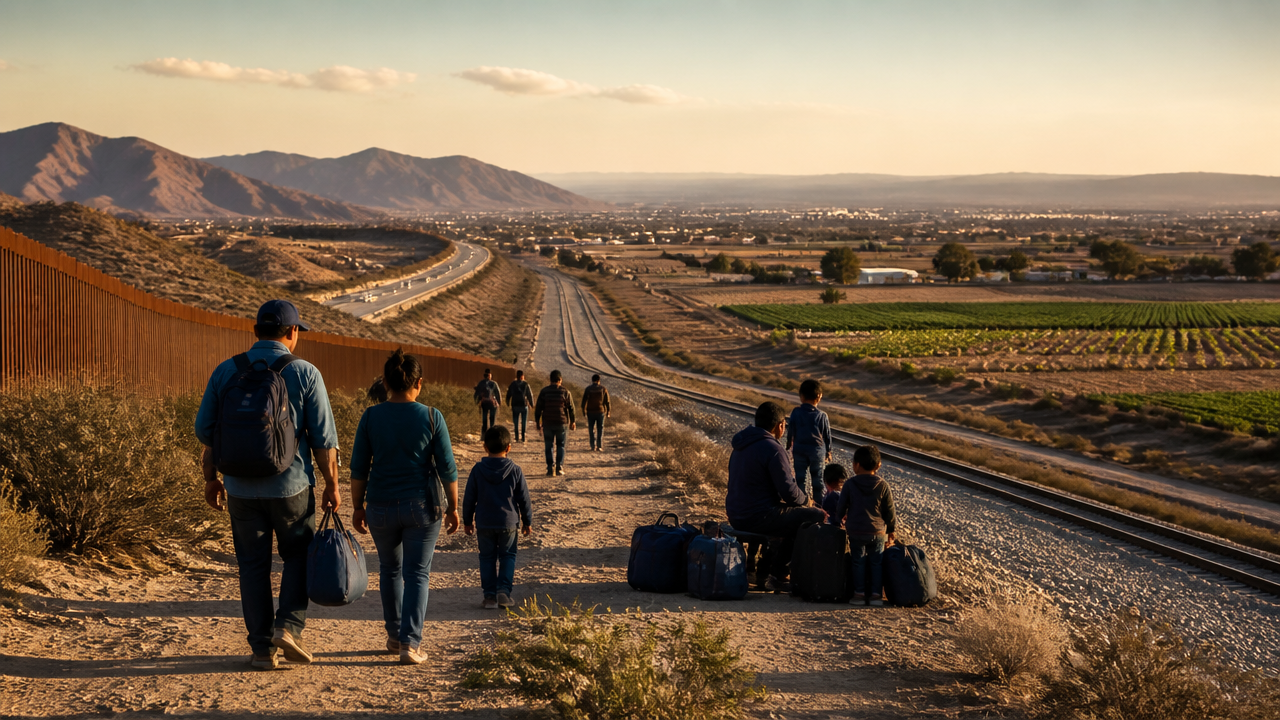
When that program ended, the need for labor did not disappear. Instead, migration adapted to a new legal environment. That shift is one reason modern debates often blur together economic demand, family networks, and unauthorized entry, even though they are not the same thing.
What do the latest numbers actually show?
The most useful answer is that Mexico remains the largest source country, but its share of the foreign-born population has been falling. Pew reported that in 2022 there were 10.6 million Mexican immigrants living in the United States, and that Mexico’s share of the immigrant population dropped from 29 percent in 2010 to 23 percent in 2022.
That decline in share is important. It shows that U.S. immigration is becoming more diverse, even while Mexican born residents still form the biggest single origin group. In other words, the story is no longer simply “more migration from Mexico every year.” It is a story of scale, slowdown, and diversification at the same time.
Another layer is legal status. A recent Migration Policy Institute profile estimates that about 5.5 million unauthorized immigrants in the United States were from Mexico as of mid 2023, equal to 40 percent of the unauthorized population at that time. That helps explain why public debate about enforcement often focuses so heavily on Mexico, even though newer arrivals increasingly come from many other countries too.
| Indicator | Recent figure | Why it matters |
|---|---|---|
| Mexican immigrants living in the U.S. | 10.6 million in 2022 | Shows Mexico remains the largest origin group |
| Share of U.S. immigrants from Mexico | 23% in 2022, down from 29% in 2010 | Shows diversification of immigrant origins |
| Immigrants from Mexico since 1965 | About 18 million | Highlights long-term historical scale |
| Unauthorized immigrants from Mexico | About 5.5 million in mid 2023 | Explains policy focus on border and status issues |
Why have migration patterns changed?
The short answer is that both Mexico and the United States changed. Mexico’s fertility rate fell, its age structure shifted, and fewer young adults were available to migrate than in earlier decades. At the same time, tougher enforcement, recession-era job losses, and changing labor demand in the United States reduced some of the momentum that had driven earlier migration.
Family ties still matter, but the path is not always fast or simple. A Migration Policy Institute fact sheet on legal pathways explains that family sponsorship has remained a major route for Mexican nationals, while employment based channels make up a much smaller share of green card grants. That point often gets lost in public debate, which tends to treat all immigration as if it followed the same route.
This is also where broader conversations about legal immigration pathways become relevant. The distinction between family based immigration, temporary work visas, humanitarian protection, and employment based strategies is not just technical. It determines timelines, evidence standards, and long-term options for settlement.
How has Latin American immigration changed the United States?
Its impact is structural, not superficial. Latin American migrants, especially from Mexico, helped build labor supply in agriculture, construction, food processing, hospitality, logistics, and small business formation. In many cities, they also stabilized neighborhoods, expanded consumer markets, and sustained local school systems through demographic renewal.
The cultural impact is just as visible. Spanish is deeply embedded in U.S. public life, Mexican cuisine has become mainstream, and Mexican American communities shape music, politics, religion, media, and education. These are not side notes. They are part of how the modern United States works.
There is also a national comparison point. Just as Irish immigration transformed nineteenth century cities and Chinese immigration reshaped parts of the West, Latin American migration changed the social map of the country in the late twentieth and early twenty first centuries. Looking at it this way moves the conversation beyond panic and toward continuity.
Are more Mexicans leaving than arriving?
In some recent years, net migration from Mexico slowed dramatically compared with its late twentieth century peak. That does not mean the connection ended. It means the pattern matured. Circular migration declined, settlement became more permanent for many families already in the United States, and new immigration increasingly came from a wider range of countries.
This is why raw border headlines can mislead readers. A border surge in one year does not automatically mean long-term Mexican migration is returning to its old peak. To interpret current events well, readers need both historical perspective and immigration statistics.
What does this mean for future immigration policy and visa strategy?
The main lesson is that U.S. immigration policy works best when it matches real migration drivers. Labor demand, family unity, humanitarian pressure, and professional mobility all create different forms of movement. A one size fits all debate usually produces poor policy and confused applicants.
For individuals, especially professionals and entrepreneurs from Latin America, the practical issue is not only whether they can move, but how they present a credible, well documented case within the right visa category. That is where companies such as Seeder Visa Solutions play a useful role, helping petitioners and law firms turn qualifications, business intent, and economic value into persuasive plans for U.S. immigration filings.
In that sense, the history of Latin American immigration is not only about the past. It also points toward the future: a U.S. system that will continue to receive people through family routes, work visas, humanitarian channels, and high skill or investment based cases. Understanding the Mexican experience makes the wider map of immigration in the United States much easier to read.
Latin American immigration has shaped the United States for generations, but Mexican migration remains the clearest lens for understanding the region’s long-term role. For readers who want context rather than slogans, the big picture is this: movement from Mexico and the wider region has changed over time, responded to labor demand and policy shifts, and left a deep mark on U.S. culture, demographics, and the economy. It also sits at the center of any serious discussion about how immigration to the United States has evolved since 1850.
That matters for families, students, employers, and visa applicants alike. At Seeder Visa Solutions, this broader historical view also helps explain why strong documentation matters so much in modern U.S. immigration cases, especially when professional plans and business plans must connect a person’s background to national interest, investment, or long-term economic value.
Key takeaways
- Mexico has been the largest single country of origin for immigrants in the United States in recent decades.
- Migration from Mexico is not one uninterrupted surge. It rose sharply in the twentieth century, slowed after the Great Recession, and now looks more complex than many public narratives suggest.
- Labor markets, family reunification, border enforcement, and demographic change in Mexico all help explain the trend.
- The impact is visible in food, language, entrepreneurship, regional labor supply, and the growth of Mexican American communities across the country.
- Understanding this history also clarifies current debates about legal pathways, unauthorized migration, and the future of U.S. immigration policy.
Why is Mexican migration so central to the Latin American story?
Because no other Latin American flow has been as large, as sustained, or as influential in the U.S. national conversation. According to Pew Research Center data published in 2024, about 18 million immigrants have arrived from Mexico since 1965, making it the largest wave of immigration from a single country in modern U.S. history.
This does not mean Latin American immigration is only a Mexico story. Migration from Central America, the Caribbean, and South America has also expanded, with different legal pathways, social profiles, and settlement patterns. Still, if someone wants to understand the region’s overall imprint on the United States, starting with Mexico is both accurate and practical.
It also helps place Latin American migration alongside other major chapters of U.S. immigration history, from Irish and Italian arrivals in earlier eras to Chinese migration in the nineteenth and twentieth centuries and later Haitian, Middle Eastern, and African inflows. Each group entered a different legal and political environment, but all became part of the same national story.
The history is older than many readers think
Mexican migration to the United States did not begin with late twentieth century border politics. Its roots go back to territorial change in the nineteenth century, regional labor markets, railroad expansion, agriculture, mining, and cross border community ties that existed before modern enforcement systems became dominant.
In the twentieth century, the pattern became more structured. The Mexican Revolution pushed many north, while U.S. employers in the Southwest pulled workers into farms, railroads, and industrial jobs. Later, the Bracero Program created a formal guest worker channel. A Congressional Research Service report notes that from 1942 to 1964 the program brought nearly 5 million Mexican agricultural workers to the United States.
When that program ended, the need for labor did not disappear. Instead, migration adapted to a new legal environment. That shift is one reason modern debates often blur together economic demand, family networks, and unauthorized entry, even though they are not the same thing.
What do the latest numbers actually show?
The most useful answer is that Mexico remains the largest source country, but its share of the foreign-born population has been falling. Pew reported that in 2022 there were 10.6 million Mexican immigrants living in the United States, and that Mexico’s share of the immigrant population dropped from 29 percent in 2010 to 23 percent in 2022.
That decline in share is important. It shows that U.S. immigration is becoming more diverse, even while Mexican born residents still form the biggest single origin group. In other words, the story is no longer simply “more migration from Mexico every year.” It is a story of scale, slowdown, and diversification at the same time.
Another layer is legal status. A recent Migration Policy Institute profile estimates that about 5.5 million unauthorized immigrants in the United States were from Mexico as of mid 2023, equal to 40 percent of the unauthorized population at that time. That helps explain why public debate about enforcement often focuses so heavily on Mexico, even though newer arrivals increasingly come from many other countries too.
| Indicator | Recent figure | Why it matters |
|---|---|---|
| Mexican immigrants living in the U.S. | 10.6 million in 2022 | Shows Mexico remains the largest origin group |
| Share of U.S. immigrants from Mexico | 23% in 2022, down from 29% in 2010 | Shows diversification of immigrant origins |
| Immigrants from Mexico since 1965 | About 18 million | Highlights long-term historical scale |
| Unauthorized immigrants from Mexico | About 5.5 million in mid 2023 | Explains policy focus on border and status issues |
Why have migration patterns changed?
The short answer is that both Mexico and the United States changed. Mexico’s fertility rate fell, its age structure shifted, and fewer young adults were available to migrate than in earlier decades. At the same time, tougher enforcement, recession-era job losses, and changing labor demand in the United States reduced some of the momentum that had driven earlier migration.
Family ties still matter, but the path is not always fast or simple. A Migration Policy Institute fact sheet on legal pathways explains that family sponsorship has remained a major route for Mexican nationals, while employment based channels make up a much smaller share of green card grants. That point often gets lost in public debate, which tends to treat all immigration as if it followed the same route.
This is also where broader conversations about legal immigration pathways become relevant. The distinction between family based immigration, temporary work visas, humanitarian protection, and employment based strategies is not just technical. It determines timelines, evidence standards, and long-term options for settlement.
How has Latin American immigration changed the United States?
Its impact is structural, not superficial. Latin American migrants, especially from Mexico, helped build labor supply in agriculture, construction, food processing, hospitality, logistics, and small business formation. In many cities, they also stabilized neighborhoods, expanded consumer markets, and sustained local school systems through demographic renewal.
The cultural impact is just as visible. Spanish is deeply embedded in U.S. public life, Mexican cuisine has become mainstream, and Mexican American communities shape music, politics, religion, media, and education. These are not side notes. They are part of how the modern United States works.
There is also a national comparison point. Just as Irish immigration transformed nineteenth century cities and Chinese immigration reshaped parts of the West, Latin American migration changed the social map of the country in the late twentieth and early twenty first centuries. Looking at it this way moves the conversation beyond panic and toward continuity.
Are more Mexicans leaving than arriving?
In some recent years, net migration from Mexico slowed dramatically compared with its late twentieth century peak. That does not mean the connection ended. It means the pattern matured. Circular migration declined, settlement became more permanent for many families already in the United States, and new immigration increasingly came from a wider range of countries.
This is why raw border headlines can mislead readers. A border surge in one year does not automatically mean long-term Mexican migration is returning to its old peak. To interpret current events well, readers need both historical perspective and immigration statistics.
What does this mean for future immigration policy and visa strategy?
The main lesson is that U.S. immigration policy works best when it matches real migration drivers. Labor demand, family unity, humanitarian pressure, and professional mobility all create different forms of movement. A one size fits all debate usually produces poor policy and confused applicants.
For individuals, especially professionals and entrepreneurs from Latin America, the practical issue is not only whether they can move, but how they present a credible, well documented case within the right visa category. That is where companies such as Seeder Visa Solutions play a useful role, helping petitioners and law firms turn qualifications, business intent, and economic value into persuasive plans for U.S. immigration filings.
In that sense, the history of Latin American immigration is not only about the past. It also points toward the future: a U.S. system that will continue to receive people through family routes, work visas, humanitarian channels, and high skill or investment based cases. Understanding the Mexican experience makes the wider map of immigration in the United States much easier to read.
Latin American immigration has shaped the United States for generations, but Mexican migration remains the clearest lens for understanding the region’s long-term role. For readers who want context rather than slogans, the big picture is this: movement from Mexico and the wider region has changed over time, responded to labor demand and policy shifts, and left a deep mark on U.S. culture, demographics, and the economy. It also sits at the center of any serious discussion about how immigration to the United States has evolved since 1850.
That matters for families, students, employers, and visa applicants alike. At Seeder Visa Solutions, this broader historical view also helps explain why strong documentation matters so much in modern U.S. immigration cases, especially when professional plans and business plans must connect a person’s background to national interest, investment, or long-term economic value.
Key takeaways
- Mexico has been the largest single country of origin for immigrants in the United States in recent decades.
- Migration from Mexico is not one uninterrupted surge. It rose sharply in the twentieth century, slowed after the Great Recession, and now looks more complex than many public narratives suggest.
- Labor markets, family reunification, border enforcement, and demographic change in Mexico all help explain the trend.
- The impact is visible in food, language, entrepreneurship, regional labor supply, and the growth of Mexican American communities across the country.
- Understanding this history also clarifies current debates about legal pathways, unauthorized migration, and the future of U.S. immigration policy.
Why is Mexican migration so central to the Latin American story?
Because no other Latin American flow has been as large, as sustained, or as influential in the U.S. national conversation. According to Pew Research Center data published in 2024, about 18 million immigrants have arrived from Mexico since 1965, making it the largest wave of immigration from a single country in modern U.S. history.
This does not mean Latin American immigration is only a Mexico story. Migration from Central America, the Caribbean, and South America has also expanded, with different legal pathways, social profiles, and settlement patterns. Still, if someone wants to understand the region’s overall imprint on the United States, starting with Mexico is both accurate and practical.
It also helps place Latin American migration alongside other major chapters of U.S. immigration history, from Irish and Italian arrivals in earlier eras to Chinese migration in the nineteenth and twentieth centuries and later Haitian, Middle Eastern, and African inflows. Each group entered a different legal and political environment, but all became part of the same national story.
The history is older than many readers think
Mexican migration to the United States did not begin with late twentieth century border politics. Its roots go back to territorial change in the nineteenth century, regional labor markets, railroad expansion, agriculture, mining, and cross border community ties that existed before modern enforcement systems became dominant.
In the twentieth century, the pattern became more structured. The Mexican Revolution pushed many north, while U.S. employers in the Southwest pulled workers into farms, railroads, and industrial jobs. Later, the Bracero Program created a formal guest worker channel. A Congressional Research Service report notes that from 1942 to 1964 the program brought nearly 5 million Mexican agricultural workers to the United States.
When that program ended, the need for labor did not disappear. Instead, migration adapted to a new legal environment. That shift is one reason modern debates often blur together economic demand, family networks, and unauthorized entry, even though they are not the same thing.
What do the latest numbers actually show?
The most useful answer is that Mexico remains the largest source country, but its share of the foreign-born population has been falling. Pew reported that in 2022 there were 10.6 million Mexican immigrants living in the United States, and that Mexico’s share of the immigrant population dropped from 29 percent in 2010 to 23 percent in 2022.
That decline in share is important. It shows that U.S. immigration is becoming more diverse, even while Mexican born residents still form the biggest single origin group. In other words, the story is no longer simply “more migration from Mexico every year.” It is a story of scale, slowdown, and diversification at the same time.
Another layer is legal status. A recent Migration Policy Institute profile estimates that about 5.5 million unauthorized immigrants in the United States were from Mexico as of mid 2023, equal to 40 percent of the unauthorized population at that time. That helps explain why public debate about enforcement often focuses so heavily on Mexico, even though newer arrivals increasingly come from many other countries too.
| Indicator | Recent figure | Why it matters |
|---|---|---|
| Mexican immigrants living in the U.S. | 10.6 million in 2022 | Shows Mexico remains the largest origin group |
| Share of U.S. immigrants from Mexico | 23% in 2022, down from 29% in 2010 | Shows diversification of immigrant origins |
| Immigrants from Mexico since 1965 | About 18 million | Highlights long-term historical scale |
| Unauthorized immigrants from Mexico | About 5.5 million in mid 2023 | Explains policy focus on border and status issues |
Why have migration patterns changed?
The short answer is that both Mexico and the United States changed. Mexico’s fertility rate fell, its age structure shifted, and fewer young adults were available to migrate than in earlier decades. At the same time, tougher enforcement, recession-era job losses, and changing labor demand in the United States reduced some of the momentum that had driven earlier migration.
Family ties still matter, but the path is not always fast or simple. A Migration Policy Institute fact sheet on legal pathways explains that family sponsorship has remained a major route for Mexican nationals, while employment based channels make up a much smaller share of green card grants. That point often gets lost in public debate, which tends to treat all immigration as if it followed the same route.
This is also where broader conversations about legal immigration pathways become relevant. The distinction between family based immigration, temporary work visas, humanitarian protection, and employment based strategies is not just technical. It determines timelines, evidence standards, and long-term options for settlement.
How has Latin American immigration changed the United States?
Its impact is structural, not superficial. Latin American migrants, especially from Mexico, helped build labor supply in agriculture, construction, food processing, hospitality, logistics, and small business formation. In many cities, they also stabilized neighborhoods, expanded consumer markets, and sustained local school systems through demographic renewal.
The cultural impact is just as visible. Spanish is deeply embedded in U.S. public life, Mexican cuisine has become mainstream, and Mexican American communities shape music, politics, religion, media, and education. These are not side notes. They are part of how the modern United States works.
There is also a national comparison point. Just as Irish immigration transformed nineteenth century cities and Chinese immigration reshaped parts of the West, Latin American migration changed the social map of the country in the late twentieth and early twenty first centuries. Looking at it this way moves the conversation beyond panic and toward continuity.
Are more Mexicans leaving than arriving?
In some recent years, net migration from Mexico slowed dramatically compared with its late twentieth century peak. That does not mean the connection ended. It means the pattern matured. Circular migration declined, settlement became more permanent for many families already in the United States, and new immigration increasingly came from a wider range of countries.
This is why raw border headlines can mislead readers. A border surge in one year does not automatically mean long-term Mexican migration is returning to its old peak. To interpret current events well, readers need both historical perspective and immigration statistics.
What does this mean for future immigration policy and visa strategy?
The main lesson is that U.S. immigration policy works best when it matches real migration drivers. Labor demand, family unity, humanitarian pressure, and professional mobility all create different forms of movement. A one size fits all debate usually produces poor policy and confused applicants.
For individuals, especially professionals and entrepreneurs from Latin America, the practical issue is not only whether they can move, but how they present a credible, well documented case within the right visa category. That is where companies such as Seeder Visa Solutions play a useful role, helping petitioners and law firms turn qualifications, business intent, and economic value into persuasive plans for U.S. immigration filings.
In that sense, the history of Latin American immigration is not only about the past. It also points toward the future: a U.S. system that will continue to receive people through family routes, work visas, humanitarian channels, and high skill or investment based cases. Understanding the Mexican experience makes the wider map of immigration in the United States much easier to read.