Targeted Employment Area: How TEA Status Impacts EB-5 Immigration
Learn how TEA designation lowers EB-5 investment thresholds by defining high-unemployment and rural qualifying areas.

For many, the dream of making a new life in the United States is tightly tied to opportunity, both personal and economic. The EB-5 immigrant investor program sits right at that intersection, fostering growth through foreign capital while offering a direct way to residency. But a much-discussed phrase sits at the heart of it: Targeted employment area status. Its role is both practical and strategic, shaping how investors choose projects and how communities benefit. At Seeder Visa Solutions, we have guided many petitioners and law firms through the nuances, and we know there are layers of practical detail you need to understand.
What is a targeted employment area under EB-5?
To start, we have to be clear about definitions. A targeted employment area—or TEA—under the EB-5 program refers to a region that satisfies specific federal criteria designed to prioritize economic development where it is needed most. Either it is a rural area, or it suffers from high unemployment.
TEA status means an investor can make a smaller investment—$800,000 as opposed to $1,050,000—if their money directly funds a project in one of these areas. That’s not just a footnote, it’s a major consideration in visa planning and project design.
- Rural TEA: Any area outside a metropolitan statistical area (MSA), and also outside any town or city with a population of 20,000 or more, based on the most recent census.
- High-unemployment TEA: Locations that, per recent data, show an average unemployment rate at least 150% of the national rate. These can be census tracts, or in some cases, a group of tracts or political subdivisions that are directly contiguous.
So when we discuss TEA eligibility, it comes down to geography, population, and labor-market statistics—with each playing a critical role in how projects and investments qualify.
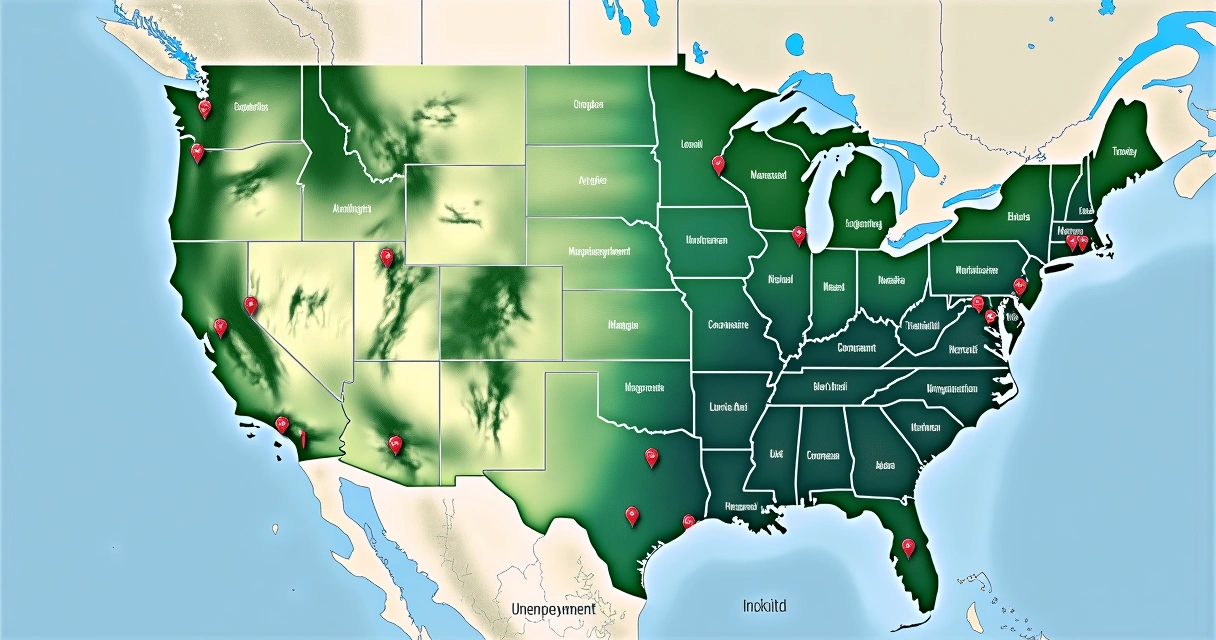
The advantage: How TEA status affects EB-5 investment
For investors considering EB-5, this designation isn’t just a technical detail. It’s a significant financial consideration.
- Investing in a qualifying TEA allows for a minimum contribution of $800,000.
- For non-TEA locations, the minimum is $1,050,000.
- The reduced threshold can open the door for more investors, increase project feasibility, and accelerate regional economic impact.
For petitioners, TEA status doesn’t alter the promise of the green card itself but reshapes the pathway by shifting where capital flows.
From the start, the EB-5 program was set up to direct foreign investment to places that wouldn’t otherwise grab headlines—quiet rural towns, pockets of persistent unemployment, almost always outside the flashiest city blocks. The reduced capital requirement is an instrument: an incentive to encourage investment with both social and economic return.
This is backed by research. According to a Brookings Institution report, EB-5 investors historically made up less than 1% of all green card recipients each year, but the dollars they bring in—and the jobs created—have outsized results. The program has funneled investment to thousands of qualifying sites, and about half the progress occurred in the years following changes around TEA definitions.
TEA status is about more than numbers—it’s about targeted growth.
We see firsthand how this smaller investment threshold changes decision-making for families and business owners aspiring to settle in the U.S. It also adds complexity for law firms and advisors. Proper designation means potentially faster pathways, less risk, and more accessible options for applicants with modest capital.
Determining TEA status: Standards, data, and mapping
Unpacking TEA status brings us into the territory of mapping, official statistics, and evolving rules. The regulatory frameworks matter. Under the EB-5 Reform and Integrity Act of 2022, more detailed and transparent guidelines apply, especially for urban boundaries and adjacent areas.
Two main categories define TEA status: rural and high unemployment. To verify either, accurate use of government data is required. Here’s how it breaks down:
- Rural area determination: Relies on U.S. Census Bureau data, focusing on population counts and metropolitan boundaries. Projects must fall outside both MSAs and cities/towns with 20,000+ people.
- High-unemployment area: Uses data from sources like the Bureau of Labor Statistics and American Community Survey. These areas must show average unemployment at least 1.5 times the nation’s rate for recent years.
An extra layer: To claim high-unemployment status, projects often link several contiguous census tracts. But the combination must be logical (directly adjacent and relevant to the project’s economic area), and not cherry-picked just for maximum statistical advantage.
State agencies, often referred to as ‘state labor or workforce agencies’, play a major role. They sometimes vet boundaries and supply letters or data confirming local unemployment levels. Accurate maps and data sets are essential, and the use of mapping tools from government sources or authorized providers is key.
Methods and official data sources
When documenting a TEA site, precision matters. We always begin with the most recent Bureau of Labor Statistics releases, cross-checked with the Census Bureau’s TIGER/Line shapefiles for exact tract mapping. Where interpretation is grey, state agency confirmation carries weight. Here’s a summary of the main sources:
- Bureau of Labor Statistics (BLS): Current Labor Force Annual Averages
- U.S. Census Bureau: Demographics, boundary definitions (using decennial Census and ACS data)
- State Workforce Agencies: Localized unemployment data and confirmation letters
- USCIS Guidance: Yearly updates, definitions, and changes stemming from legislation
With the right sources in hand, a combination of mapping and data analysis is used to demonstrate the investment site’s eligibility. This is not always straightforward—it is an area where small missteps can mean the difference between approval and setback.
The TEA letter: Proving the designation
A vital piece of the EB-5 package is a formal, supporting ‘TEA letter’, issued by the relevant agency or clearly documented by professional analysis. This letter must:
- Identify the precise address of the project and the boundaries of the TEA
- Provide the most recent unemployment or population data (and specify year/source)
- Show detail on methodology, including which data was aggregated and how boundaries were determined
- Confirm that either rural or high-unemployment criteria are met under current rules
Each claim in a TEA letter must be verifiable and supportable with official, up-to-date data sources. It sets the standard for what the adjudicator will review.
The documentation is more than formality, it’s the foundation supporting the entire investment and subsequent visa. Seeder Visa Solutions specializes in drawing these lines accurately and confirming every figure.

Controversy and manipulation: The gerrymandering question
For all its strengths, TEA status comes with controversy. Over the years, some have combined census tracts in ways that stretch the spirit of the law, drawing boundaries that wind through prosperous and struggling neighborhoods alike to bring a project into compliance.
A Brookings article from 2015 described how some high-profile city projects claimed TEA status by connecting a patchwork of tracts—even if the target area itself was not truly high in unemployment. In these cases, the economic boost might not reach the populations TEA designation was meant to help.
Compliance without purpose fails the intent of TEA policy.
Lawmakers have responded with stricter rules on tract combination and clearer requirements on what constitutes a logical, contiguous zone. The EB-5 Reform and Integrity Act set limits on how TEA areas can be built from census tracts. Projects now face greater scrutiny: aggregated tracts must be directly adjacent, and each combined area must make economic sense—no more arbitrary “snaking.”
In our practice, we have seen how careful mapping and solid documentation mitigate risk. For law firms and petitioners, due diligence is not a single step: it is a continuous process that starts with site selection and ends with submission, always anchored in transparency.
Strategic benefits: For investors, for communities
Why seek TEA status? Beyond the obvious reduction in investment size, the benefits are real for communities and investors alike.
- For investors: The lower threshold opens the program for more participants while focusing on projects with strong approval potential. Applicants can spread resources further, seek faster approval timelines (as rural projects may receive priority processing), and find opportunities directly linked to development outcomes.
- For US regions: Direct foreign investment flows to areas that might have previously struggled to attract capital. From new hotels in small towns to infrastructure projects in aging districts, TEA status aligns incentives toward regional revitalization and job creation.
In our consultations, we have seen projects that, thanks to TEA designation, secured vital funding, revitalized declining areas, and created jobs far beyond original estimates. Brookings research suggests that the EB-5 program, in a single 4-year stretch, contributed over 43,000 full-time jobs and billions in investment, with a substantial part aimed at targeted areas as detailed in their analysis.
TEA-driven investments are not about short-term gains—they build long-lasting economic impact where it is needed most.

Supporting a TEA claim: Documentation and due diligence
Getting TEA status right is a matter of data, mapping, documentation, and expert guidance. A successful petition requires:
- Accurate project mapping and identification of applicable census tracts
- Current, reliable unemployment or population data—properly referenced to source
- Clear, official letters (often from state agencies) or professionally-prepared analysis supporting the TEA claim
- Transparent explanation of methodology, so decision makers can replicate the path from raw data to the claim
- Thorough due diligence—verifying that every fact, figure, and boundary matches the latest guidance and legislation
For law firms and applicants, a TEA application is only as strong as the foundation built under it.
At Seeder Visa Solutions, we see every TEA claim as a portfolio of details, interlocking and critical. It’s why we blend technical expertise with the latest mapping and data tools, delivering documentation that meets practical, not just procedural, standards. We recommend a process-driven approach:
- Begin with project location and property details
- Define census tract boundaries using the latest maps and census data
- Contact the appropriate state workforce agency for current unemployment figures or confirmation letters
- Prepare documentation showing tract aggregation (if applicable) and rationale
- Compile a clear, detailed TEA letter and supporting evidence package
- Periodically review guidance and rules; revisit documentation as program requirements evolve
Missing one of these steps can put an application at risk. Putting in the legwork means you set up the project—and all investors—for a smoother journey through the EB-5 process.
Practical guidance for law firms and petitioners
When planning an EB-5 submission based on TEA, we always suggest early and active verification of all figures and boundaries. Double-check whether new census data or legal changes affect your site. Make a habit of contacting state workforce boards for up-to-date letters.
Rely on expert translators and technical writers. That’s our practice at Seeder Visa Solutions, creating business plans and supporting documentation that simplify the path. Partnering with a team versed in TEA rules means your submission stands on solid ground.
Accuracy at the TEA stage sets the tone for the entire EB-5 success story.
Petitioners should assemble:
- Clear maps
- Full source data sheets
- Copies of all official letters
- Complete explanations for any boundaries drawn or data aggregated
We think this attention to detail not only speeds up the process but minimizes requests for evidence (RFEs) and leads to more predictable outcomes. Experienced advisors and well-crafted documentation remain your best path forward.
Conclusion: TEA status as pathway to impact and opportunity
If we look at the numbers and stories behind the EB-5 program’s reach, targeted employment area status has been a lever for growth and change. Not just for investors, but for communities left out of other types of economic development. The policy’s ongoing reforms and scrutiny only underscore how meaningful it is to get every step right.
For law firms and petitioners aiming to bring their investment or professional plan to life, the fine print of TEA requirements can be the gateway to greater access, lower costs, and a more direct route to the green card. The path is not always simple. But with sharp attention to mapping, data, and legal standards, you unlock opportunity for all involved.
Seeder Visa Solutions is ready to help you design robust business plans and supporting materials that meet the standard—so that your EB-5 petition, built on a solid TEA foundation, stands out. Contact us today to see how our tailored solutions can support your EB-5 journey or your clients’ success.
Frequently asked questions
What is a targeted employment area?
A targeted employment area, in EB-5 terms, is a U.S. region either considered rural (not in a metro area, and outside any city/town of 20,000+ people) or facing high unemployment (at least 150% of the national average). Investments in these zones qualify for the lower EB-5 minimum of $800,000. TEAs are carefully mapped using census and labor statistics.
How does TEA status affect EB-5 investment?
TEA status lowers the minimum EB-5 investment from $1,050,000 to $800,000 if the money funds a qualifying rural or high-unemployment project. This makes participation accessible for more investors and often channels funds to where they can generate real local economic improvement.
How can I find TEA locations?
TEA locations are typically determined using up-to-date census tract maps and the latest labor data. State workforce agencies sometimes issue confirmation letters. Prospective investors or law firms should consult census tract maps, recent unemployment reports, and work with experts to verify their project’s region before moving forward.
Is investing in a TEA worth it?
Many investors believe so, both for the reduced financial entry and the chance to support regional growth. Studies have shown that TEA investments are tied to job creation and the revitalization of underserved communities. Just be aware that due diligence and documentation are key—mistakes can delay processing or put approvals at risk.
What are the benefits of TEA designation?
TEA designation means investing with a lower minimum, which appeals to more applicants. For communities, it attracts capital, creates jobs, and funds projects that might otherwise struggle. TEA incentives redirect resources to where they have a wider social impact and foster economic opportunity for regions most in need.
For many, the dream of making a new life in the United States is tightly tied to opportunity, both personal and economic. The EB-5 immigrant investor program sits right at that intersection, fostering growth through foreign capital while offering a direct way to residency. But a much-discussed phrase sits at the heart of it: Targeted employment area status. Its role is both practical and strategic, shaping how investors choose projects and how communities benefit. At Seeder Visa Solutions, we have guided many petitioners and law firms through the nuances, and we know there are layers of practical detail you need to understand.
What is a targeted employment area under EB-5?
To start, we have to be clear about definitions. A targeted employment area—or TEA—under the EB-5 program refers to a region that satisfies specific federal criteria designed to prioritize economic development where it is needed most. Either it is a rural area, or it suffers from high unemployment.
TEA status means an investor can make a smaller investment—$800,000 as opposed to $1,050,000—if their money directly funds a project in one of these areas. That’s not just a footnote, it’s a major consideration in visa planning and project design.
- Rural TEA: Any area outside a metropolitan statistical area (MSA), and also outside any town or city with a population of 20,000 or more, based on the most recent census.
- High-unemployment TEA: Locations that, per recent data, show an average unemployment rate at least 150% of the national rate. These can be census tracts, or in some cases, a group of tracts or political subdivisions that are directly contiguous.
So when we discuss TEA eligibility, it comes down to geography, population, and labor-market statistics—with each playing a critical role in how projects and investments qualify.
The advantage: How TEA status affects EB-5 investment
For investors considering EB-5, this designation isn’t just a technical detail. It’s a significant financial consideration.
- Investing in a qualifying TEA allows for a minimum contribution of $800,000.
- For non-TEA locations, the minimum is $1,050,000.
- The reduced threshold can open the door for more investors, increase project feasibility, and accelerate regional economic impact.
For petitioners, TEA status doesn’t alter the promise of the green card itself but reshapes the pathway by shifting where capital flows.
From the start, the EB-5 program was set up to direct foreign investment to places that wouldn’t otherwise grab headlines—quiet rural towns, pockets of persistent unemployment, almost always outside the flashiest city blocks. The reduced capital requirement is an instrument: an incentive to encourage investment with both social and economic return.
This is backed by research. According to a Brookings Institution report, EB-5 investors historically made up less than 1% of all green card recipients each year, but the dollars they bring in—and the jobs created—have outsized results. The program has funneled investment to thousands of qualifying sites, and about half the progress occurred in the years following changes around TEA definitions.
TEA status is about more than numbers—it’s about targeted growth.
We see firsthand how this smaller investment threshold changes decision-making for families and business owners aspiring to settle in the U.S. It also adds complexity for law firms and advisors. Proper designation means potentially faster pathways, less risk, and more accessible options for applicants with modest capital.
Determining TEA status: Standards, data, and mapping
Unpacking TEA status brings us into the territory of mapping, official statistics, and evolving rules. The regulatory frameworks matter. Under the EB-5 Reform and Integrity Act of 2022, more detailed and transparent guidelines apply, especially for urban boundaries and adjacent areas.
Two main categories define TEA status: rural and high unemployment. To verify either, accurate use of government data is required. Here’s how it breaks down:
- Rural area determination: Relies on U.S. Census Bureau data, focusing on population counts and metropolitan boundaries. Projects must fall outside both MSAs and cities/towns with 20,000+ people.
- High-unemployment area: Uses data from sources like the Bureau of Labor Statistics and American Community Survey. These areas must show average unemployment at least 1.5 times the nation’s rate for recent years.
An extra layer: To claim high-unemployment status, projects often link several contiguous census tracts. But the combination must be logical (directly adjacent and relevant to the project’s economic area), and not cherry-picked just for maximum statistical advantage.
State agencies, often referred to as ‘state labor or workforce agencies’, play a major role. They sometimes vet boundaries and supply letters or data confirming local unemployment levels. Accurate maps and data sets are essential, and the use of mapping tools from government sources or authorized providers is key.
Methods and official data sources
When documenting a TEA site, precision matters. We always begin with the most recent Bureau of Labor Statistics releases, cross-checked with the Census Bureau’s TIGER/Line shapefiles for exact tract mapping. Where interpretation is grey, state agency confirmation carries weight. Here’s a summary of the main sources:
- Bureau of Labor Statistics (BLS): Current Labor Force Annual Averages
- U.S. Census Bureau: Demographics, boundary definitions (using decennial Census and ACS data)
- State Workforce Agencies: Localized unemployment data and confirmation letters
- USCIS Guidance: Yearly updates, definitions, and changes stemming from legislation
With the right sources in hand, a combination of mapping and data analysis is used to demonstrate the investment site’s eligibility. This is not always straightforward—it is an area where small missteps can mean the difference between approval and setback.
The TEA letter: Proving the designation
A vital piece of the EB-5 package is a formal, supporting ‘TEA letter’, issued by the relevant agency or clearly documented by professional analysis. This letter must:
- Identify the precise address of the project and the boundaries of the TEA
- Provide the most recent unemployment or population data (and specify year/source)
- Show detail on methodology, including which data was aggregated and how boundaries were determined
- Confirm that either rural or high-unemployment criteria are met under current rules
Each claim in a TEA letter must be verifiable and supportable with official, up-to-date data sources. It sets the standard for what the adjudicator will review.
The documentation is more than formality, it’s the foundation supporting the entire investment and subsequent visa. Seeder Visa Solutions specializes in drawing these lines accurately and confirming every figure.
Controversy and manipulation: The gerrymandering question
For all its strengths, TEA status comes with controversy. Over the years, some have combined census tracts in ways that stretch the spirit of the law, drawing boundaries that wind through prosperous and struggling neighborhoods alike to bring a project into compliance.
A Brookings article from 2015 described how some high-profile city projects claimed TEA status by connecting a patchwork of tracts—even if the target area itself was not truly high in unemployment. In these cases, the economic boost might not reach the populations TEA designation was meant to help.
Compliance without purpose fails the intent of TEA policy.
Lawmakers have responded with stricter rules on tract combination and clearer requirements on what constitutes a logical, contiguous zone. The EB-5 Reform and Integrity Act set limits on how TEA areas can be built from census tracts. Projects now face greater scrutiny: aggregated tracts must be directly adjacent, and each combined area must make economic sense—no more arbitrary “snaking.”
In our practice, we have seen how careful mapping and solid documentation mitigate risk. For law firms and petitioners, due diligence is not a single step: it is a continuous process that starts with site selection and ends with submission, always anchored in transparency.
Strategic benefits: For investors, for communities
Why seek TEA status? Beyond the obvious reduction in investment size, the benefits are real for communities and investors alike.
- For investors: The lower threshold opens the program for more participants while focusing on projects with strong approval potential. Applicants can spread resources further, seek faster approval timelines (as rural projects may receive priority processing), and find opportunities directly linked to development outcomes.
- For US regions: Direct foreign investment flows to areas that might have previously struggled to attract capital. From new hotels in small towns to infrastructure projects in aging districts, TEA status aligns incentives toward regional revitalization and job creation.
In our consultations, we have seen projects that, thanks to TEA designation, secured vital funding, revitalized declining areas, and created jobs far beyond original estimates. Brookings research suggests that the EB-5 program, in a single 4-year stretch, contributed over 43,000 full-time jobs and billions in investment, with a substantial part aimed at targeted areas as detailed in their analysis.
TEA-driven investments are not about short-term gains—they build long-lasting economic impact where it is needed most.
Supporting a TEA claim: Documentation and due diligence
Getting TEA status right is a matter of data, mapping, documentation, and expert guidance. A successful petition requires:
- Accurate project mapping and identification of applicable census tracts
- Current, reliable unemployment or population data—properly referenced to source
- Clear, official letters (often from state agencies) or professionally-prepared analysis supporting the TEA claim
- Transparent explanation of methodology, so decision makers can replicate the path from raw data to the claim
- Thorough due diligence—verifying that every fact, figure, and boundary matches the latest guidance and legislation
For law firms and applicants, a TEA application is only as strong as the foundation built under it.
At Seeder Visa Solutions, we see every TEA claim as a portfolio of details, interlocking and critical. It’s why we blend technical expertise with the latest mapping and data tools, delivering documentation that meets practical, not just procedural, standards. We recommend a process-driven approach:
- Begin with project location and property details
- Define census tract boundaries using the latest maps and census data
- Contact the appropriate state workforce agency for current unemployment figures or confirmation letters
- Prepare documentation showing tract aggregation (if applicable) and rationale
- Compile a clear, detailed TEA letter and supporting evidence package
- Periodically review guidance and rules; revisit documentation as program requirements evolve
Missing one of these steps can put an application at risk. Putting in the legwork means you set up the project—and all investors—for a smoother journey through the EB-5 process.
Practical guidance for law firms and petitioners
When planning an EB-5 submission based on TEA, we always suggest early and active verification of all figures and boundaries. Double-check whether new census data or legal changes affect your site. Make a habit of contacting state workforce boards for up-to-date letters.
Rely on expert translators and technical writers. That’s our practice at Seeder Visa Solutions, creating business plans and supporting documentation that simplify the path. Partnering with a team versed in TEA rules means your submission stands on solid ground.
Accuracy at the TEA stage sets the tone for the entire EB-5 success story.
Petitioners should assemble:
- Clear maps
- Full source data sheets
- Copies of all official letters
- Complete explanations for any boundaries drawn or data aggregated
We think this attention to detail not only speeds up the process but minimizes requests for evidence (RFEs) and leads to more predictable outcomes. Experienced advisors and well-crafted documentation remain your best path forward.
Conclusion: TEA status as pathway to impact and opportunity
If we look at the numbers and stories behind the EB-5 program’s reach, targeted employment area status has been a lever for growth and change. Not just for investors, but for communities left out of other types of economic development. The policy’s ongoing reforms and scrutiny only underscore how meaningful it is to get every step right.
For law firms and petitioners aiming to bring their investment or professional plan to life, the fine print of TEA requirements can be the gateway to greater access, lower costs, and a more direct route to the green card. The path is not always simple. But with sharp attention to mapping, data, and legal standards, you unlock opportunity for all involved.
Seeder Visa Solutions is ready to help you design robust business plans and supporting materials that meet the standard—so that your EB-5 petition, built on a solid TEA foundation, stands out. Contact us today to see how our tailored solutions can support your EB-5 journey or your clients’ success.
Frequently asked questions
What is a targeted employment area?
A targeted employment area, in EB-5 terms, is a U.S. region either considered rural (not in a metro area, and outside any city/town of 20,000+ people) or facing high unemployment (at least 150% of the national average). Investments in these zones qualify for the lower EB-5 minimum of $800,000. TEAs are carefully mapped using census and labor statistics.
How does TEA status affect EB-5 investment?
TEA status lowers the minimum EB-5 investment from $1,050,000 to $800,000 if the money funds a qualifying rural or high-unemployment project. This makes participation accessible for more investors and often channels funds to where they can generate real local economic improvement.
How can I find TEA locations?
TEA locations are typically determined using up-to-date census tract maps and the latest labor data. State workforce agencies sometimes issue confirmation letters. Prospective investors or law firms should consult census tract maps, recent unemployment reports, and work with experts to verify their project’s region before moving forward.
Is investing in a TEA worth it?
Many investors believe so, both for the reduced financial entry and the chance to support regional growth. Studies have shown that TEA investments are tied to job creation and the revitalization of underserved communities. Just be aware that due diligence and documentation are key—mistakes can delay processing or put approvals at risk.
What are the benefits of TEA designation?
TEA designation means investing with a lower minimum, which appeals to more applicants. For communities, it attracts capital, creates jobs, and funds projects that might otherwise struggle. TEA incentives redirect resources to where they have a wider social impact and foster economic opportunity for regions most in need.
For many, the dream of making a new life in the United States is tightly tied to opportunity, both personal and economic. The EB-5 immigrant investor program sits right at that intersection, fostering growth through foreign capital while offering a direct way to residency. But a much-discussed phrase sits at the heart of it: Targeted employment area status. Its role is both practical and strategic, shaping how investors choose projects and how communities benefit. At Seeder Visa Solutions, we have guided many petitioners and law firms through the nuances, and we know there are layers of practical detail you need to understand.
What is a targeted employment area under EB-5?
To start, we have to be clear about definitions. A targeted employment area—or TEA—under the EB-5 program refers to a region that satisfies specific federal criteria designed to prioritize economic development where it is needed most. Either it is a rural area, or it suffers from high unemployment.
TEA status means an investor can make a smaller investment—$800,000 as opposed to $1,050,000—if their money directly funds a project in one of these areas. That’s not just a footnote, it’s a major consideration in visa planning and project design.
- Rural TEA: Any area outside a metropolitan statistical area (MSA), and also outside any town or city with a population of 20,000 or more, based on the most recent census.
- High-unemployment TEA: Locations that, per recent data, show an average unemployment rate at least 150% of the national rate. These can be census tracts, or in some cases, a group of tracts or political subdivisions that are directly contiguous.
So when we discuss TEA eligibility, it comes down to geography, population, and labor-market statistics—with each playing a critical role in how projects and investments qualify.
The advantage: How TEA status affects EB-5 investment
For investors considering EB-5, this designation isn’t just a technical detail. It’s a significant financial consideration.
- Investing in a qualifying TEA allows for a minimum contribution of $800,000.
- For non-TEA locations, the minimum is $1,050,000.
- The reduced threshold can open the door for more investors, increase project feasibility, and accelerate regional economic impact.
For petitioners, TEA status doesn’t alter the promise of the green card itself but reshapes the pathway by shifting where capital flows.
From the start, the EB-5 program was set up to direct foreign investment to places that wouldn’t otherwise grab headlines—quiet rural towns, pockets of persistent unemployment, almost always outside the flashiest city blocks. The reduced capital requirement is an instrument: an incentive to encourage investment with both social and economic return.
This is backed by research. According to a Brookings Institution report, EB-5 investors historically made up less than 1% of all green card recipients each year, but the dollars they bring in—and the jobs created—have outsized results. The program has funneled investment to thousands of qualifying sites, and about half the progress occurred in the years following changes around TEA definitions.
TEA status is about more than numbers—it’s about targeted growth.
We see firsthand how this smaller investment threshold changes decision-making for families and business owners aspiring to settle in the U.S. It also adds complexity for law firms and advisors. Proper designation means potentially faster pathways, less risk, and more accessible options for applicants with modest capital.
Determining TEA status: Standards, data, and mapping
Unpacking TEA status brings us into the territory of mapping, official statistics, and evolving rules. The regulatory frameworks matter. Under the EB-5 Reform and Integrity Act of 2022, more detailed and transparent guidelines apply, especially for urban boundaries and adjacent areas.
Two main categories define TEA status: rural and high unemployment. To verify either, accurate use of government data is required. Here’s how it breaks down:
- Rural area determination: Relies on U.S. Census Bureau data, focusing on population counts and metropolitan boundaries. Projects must fall outside both MSAs and cities/towns with 20,000+ people.
- High-unemployment area: Uses data from sources like the Bureau of Labor Statistics and American Community Survey. These areas must show average unemployment at least 1.5 times the nation’s rate for recent years.
An extra layer: To claim high-unemployment status, projects often link several contiguous census tracts. But the combination must be logical (directly adjacent and relevant to the project’s economic area), and not cherry-picked just for maximum statistical advantage.
State agencies, often referred to as ‘state labor or workforce agencies’, play a major role. They sometimes vet boundaries and supply letters or data confirming local unemployment levels. Accurate maps and data sets are essential, and the use of mapping tools from government sources or authorized providers is key.
Methods and official data sources
When documenting a TEA site, precision matters. We always begin with the most recent Bureau of Labor Statistics releases, cross-checked with the Census Bureau’s TIGER/Line shapefiles for exact tract mapping. Where interpretation is grey, state agency confirmation carries weight. Here’s a summary of the main sources:
- Bureau of Labor Statistics (BLS): Current Labor Force Annual Averages
- U.S. Census Bureau: Demographics, boundary definitions (using decennial Census and ACS data)
- State Workforce Agencies: Localized unemployment data and confirmation letters
- USCIS Guidance: Yearly updates, definitions, and changes stemming from legislation
With the right sources in hand, a combination of mapping and data analysis is used to demonstrate the investment site’s eligibility. This is not always straightforward—it is an area where small missteps can mean the difference between approval and setback.
The TEA letter: Proving the designation
A vital piece of the EB-5 package is a formal, supporting ‘TEA letter’, issued by the relevant agency or clearly documented by professional analysis. This letter must:
- Identify the precise address of the project and the boundaries of the TEA
- Provide the most recent unemployment or population data (and specify year/source)
- Show detail on methodology, including which data was aggregated and how boundaries were determined
- Confirm that either rural or high-unemployment criteria are met under current rules
Each claim in a TEA letter must be verifiable and supportable with official, up-to-date data sources. It sets the standard for what the adjudicator will review.
The documentation is more than formality, it’s the foundation supporting the entire investment and subsequent visa. Seeder Visa Solutions specializes in drawing these lines accurately and confirming every figure.
Controversy and manipulation: The gerrymandering question
For all its strengths, TEA status comes with controversy. Over the years, some have combined census tracts in ways that stretch the spirit of the law, drawing boundaries that wind through prosperous and struggling neighborhoods alike to bring a project into compliance.
A Brookings article from 2015 described how some high-profile city projects claimed TEA status by connecting a patchwork of tracts—even if the target area itself was not truly high in unemployment. In these cases, the economic boost might not reach the populations TEA designation was meant to help.
Compliance without purpose fails the intent of TEA policy.
Lawmakers have responded with stricter rules on tract combination and clearer requirements on what constitutes a logical, contiguous zone. The EB-5 Reform and Integrity Act set limits on how TEA areas can be built from census tracts. Projects now face greater scrutiny: aggregated tracts must be directly adjacent, and each combined area must make economic sense—no more arbitrary “snaking.”
In our practice, we have seen how careful mapping and solid documentation mitigate risk. For law firms and petitioners, due diligence is not a single step: it is a continuous process that starts with site selection and ends with submission, always anchored in transparency.
Strategic benefits: For investors, for communities
Why seek TEA status? Beyond the obvious reduction in investment size, the benefits are real for communities and investors alike.
- For investors: The lower threshold opens the program for more participants while focusing on projects with strong approval potential. Applicants can spread resources further, seek faster approval timelines (as rural projects may receive priority processing), and find opportunities directly linked to development outcomes.
- For US regions: Direct foreign investment flows to areas that might have previously struggled to attract capital. From new hotels in small towns to infrastructure projects in aging districts, TEA status aligns incentives toward regional revitalization and job creation.
In our consultations, we have seen projects that, thanks to TEA designation, secured vital funding, revitalized declining areas, and created jobs far beyond original estimates. Brookings research suggests that the EB-5 program, in a single 4-year stretch, contributed over 43,000 full-time jobs and billions in investment, with a substantial part aimed at targeted areas as detailed in their analysis.
TEA-driven investments are not about short-term gains—they build long-lasting economic impact where it is needed most.
Supporting a TEA claim: Documentation and due diligence
Getting TEA status right is a matter of data, mapping, documentation, and expert guidance. A successful petition requires:
- Accurate project mapping and identification of applicable census tracts
- Current, reliable unemployment or population data—properly referenced to source
- Clear, official letters (often from state agencies) or professionally-prepared analysis supporting the TEA claim
- Transparent explanation of methodology, so decision makers can replicate the path from raw data to the claim
- Thorough due diligence—verifying that every fact, figure, and boundary matches the latest guidance and legislation
For law firms and applicants, a TEA application is only as strong as the foundation built under it.
At Seeder Visa Solutions, we see every TEA claim as a portfolio of details, interlocking and critical. It’s why we blend technical expertise with the latest mapping and data tools, delivering documentation that meets practical, not just procedural, standards. We recommend a process-driven approach:
- Begin with project location and property details
- Define census tract boundaries using the latest maps and census data
- Contact the appropriate state workforce agency for current unemployment figures or confirmation letters
- Prepare documentation showing tract aggregation (if applicable) and rationale
- Compile a clear, detailed TEA letter and supporting evidence package
- Periodically review guidance and rules; revisit documentation as program requirements evolve
Missing one of these steps can put an application at risk. Putting in the legwork means you set up the project—and all investors—for a smoother journey through the EB-5 process.
Practical guidance for law firms and petitioners
When planning an EB-5 submission based on TEA, we always suggest early and active verification of all figures and boundaries. Double-check whether new census data or legal changes affect your site. Make a habit of contacting state workforce boards for up-to-date letters.
Rely on expert translators and technical writers. That’s our practice at Seeder Visa Solutions, creating business plans and supporting documentation that simplify the path. Partnering with a team versed in TEA rules means your submission stands on solid ground.
Accuracy at the TEA stage sets the tone for the entire EB-5 success story.
Petitioners should assemble:
- Clear maps
- Full source data sheets
- Copies of all official letters
- Complete explanations for any boundaries drawn or data aggregated
We think this attention to detail not only speeds up the process but minimizes requests for evidence (RFEs) and leads to more predictable outcomes. Experienced advisors and well-crafted documentation remain your best path forward.
Conclusion: TEA status as pathway to impact and opportunity
If we look at the numbers and stories behind the EB-5 program’s reach, targeted employment area status has been a lever for growth and change. Not just for investors, but for communities left out of other types of economic development. The policy’s ongoing reforms and scrutiny only underscore how meaningful it is to get every step right.
For law firms and petitioners aiming to bring their investment or professional plan to life, the fine print of TEA requirements can be the gateway to greater access, lower costs, and a more direct route to the green card. The path is not always simple. But with sharp attention to mapping, data, and legal standards, you unlock opportunity for all involved.
Seeder Visa Solutions is ready to help you design robust business plans and supporting materials that meet the standard—so that your EB-5 petition, built on a solid TEA foundation, stands out. Contact us today to see how our tailored solutions can support your EB-5 journey or your clients’ success.
Frequently asked questions
What is a targeted employment area?
A targeted employment area, in EB-5 terms, is a U.S. region either considered rural (not in a metro area, and outside any city/town of 20,000+ people) or facing high unemployment (at least 150% of the national average). Investments in these zones qualify for the lower EB-5 minimum of $800,000. TEAs are carefully mapped using census and labor statistics.
How does TEA status affect EB-5 investment?
TEA status lowers the minimum EB-5 investment from $1,050,000 to $800,000 if the money funds a qualifying rural or high-unemployment project. This makes participation accessible for more investors and often channels funds to where they can generate real local economic improvement.
How can I find TEA locations?
TEA locations are typically determined using up-to-date census tract maps and the latest labor data. State workforce agencies sometimes issue confirmation letters. Prospective investors or law firms should consult census tract maps, recent unemployment reports, and work with experts to verify their project’s region before moving forward.
Is investing in a TEA worth it?
Many investors believe so, both for the reduced financial entry and the chance to support regional growth. Studies have shown that TEA investments are tied to job creation and the revitalization of underserved communities. Just be aware that due diligence and documentation are key—mistakes can delay processing or put approvals at risk.
What are the benefits of TEA designation?
TEA designation means investing with a lower minimum, which appeals to more applicants. For communities, it attracts capital, creates jobs, and funds projects that might otherwise struggle. TEA incentives redirect resources to where they have a wider social impact and foster economic opportunity for regions most in need.