U.S. Immigration History: Waves, Causes, Maps, and Stories
Learn how major immigrant waves, landmark laws, and iconic entry points shaped the United States, and why that history still matters today.
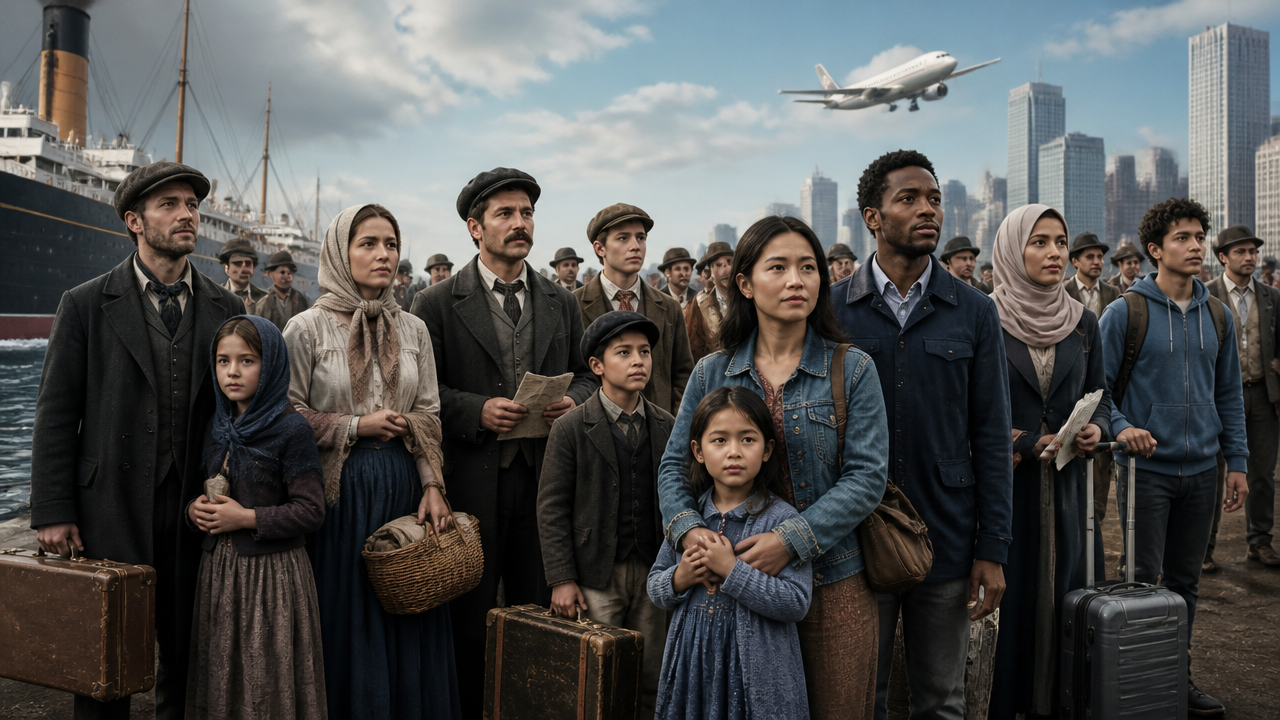
U.S. immigration history is the story of repeated movement, adaptation, and rule changes, not one single national tradition. For readers who want a clear starting point, this guide explains the main waves of arrivals, why people came, how laws changed, and why those shifts still matter now. It is especially useful for anyone trying to understand the broader context behind modern immigration debates, policy design, and case preparation.
That long view also helps explain why immigration paperwork in the United States has become so detailed. At Seeder Visa Solutions, that historical perspective matters because strong visa documentation is easier to build when you understand how economic need, national security, family reunification, and merit based arguments have shaped U.S. policy over time.
Key takeaways from the U.S. immigration story
- There was never just one wave. The country received different groups at different times, from early Europeans to later arrivals from Asia, Latin America, the Caribbean, Africa, and the Middle East.
- People usually moved for a mix of reasons. Famine, war, persecution, wages, land, family ties, and business opportunities often overlapped.
- Policy changed from openness to restriction, then to new selection systems. The shift from few federal controls to quotas and later reforms shaped who could enter.
- Ports mattered. Ellis Island and Angel Island were not just buildings, they reflected how the nation welcomed, screened, or excluded newcomers.
- History still shapes the present. The U.S. Census Bureau said net international migration to the United States reached 2.8 million between 2023 and 2024, showing that migration remains a major force in national growth and planning.
When did the United States start receiving immigrants?
The United States has received immigrants since its earliest national years, but the first decades looked very different from the system people know today. According to the USCIS overview of immigration administration, the early republic generally encouraged immigration and operated with far fewer federal controls than later periods.
That does not mean the system was equal. Early citizenship rules favored some groups over others, and Native peoples, enslaved Africans, and many nonwhite newcomers were treated through entirely different legal frameworks. So when people ask, "When was the first immigration?" the better answer is that migration to North America began long before the modern United States, but federal immigration regulation came later and gradually became stricter.
If you are exploring the wider topic of immigration in the United States of America, this is the first idea to keep in mind: the country was built through mobility, yet it has repeatedly argued over who should be admitted and on what terms.
Why did major immigrant waves happen?
Most large migration waves happened because pressure at home met opportunity in the United States. People rarely moved for one reason alone. A family might leave because of crop failure, political instability, religious discrimination, and the chance of industrial work, all at the same time.
The Library of Congress overview of immigration in the late 1800s notes that the Irish arrived in large numbers during the famine years, while news of the California Gold Rush drew many Chinese migrants to the West Coast. That pattern helps explain why the history of Irish settlement and the history of Chinese migration often appear in separate conversations, even though both were central to the making of the country.
Later waves followed the same basic logic with different origins. Southern and Eastern Europeans came as industrial cities expanded. In the 20th and 21st centuries, arrivals from Mexico, Haiti, and many Muslim majority countries were shaped by labor demand, family networks, upheaval, and changing law. That is why modern discussions about Mexican, Haitian, or Muslim immigration make the most sense when placed inside a longer historical timeline instead of treated as isolated episodes.
Which periods most changed the nation?
Several turning points reshaped the immigrant population and the rules around it. The table below gives a practical timeline that readers can use as a map.
| Period | What changed | Why it mattered |
|---|---|---|
| Early republic to mid 1800s | Relatively few federal restrictions | Migration expanded with westward growth, trade, and labor demand |
| 1840s to late 1800s | Large arrivals from Ireland, Germany, and China | Famine, revolution, and gold rush opportunities accelerated movement |
| 1880s to 1920s | More federal control and inspection | The government built systems to screen, document, and limit entry |
| 1920s | Quota laws and Asian exclusion tightened | National origins rules favored older European source countries |
| Late 20th century to present | More diverse global inflows | Family, employment, humanitarian, and business pathways gained importance |
This framework also helps readers connect history to current Census migration estimates, which show that international movement remains a live demographic force, not just a chapter in a textbook.
How did Ellis Island and Angel Island shape immigrant memory?
These entry points became symbols because they turned immigration into a visible public process. Ellis Island is often remembered as a gateway of hope, while Angel Island is more closely associated with detention, questioning, and exclusion, especially for Asian migrants.
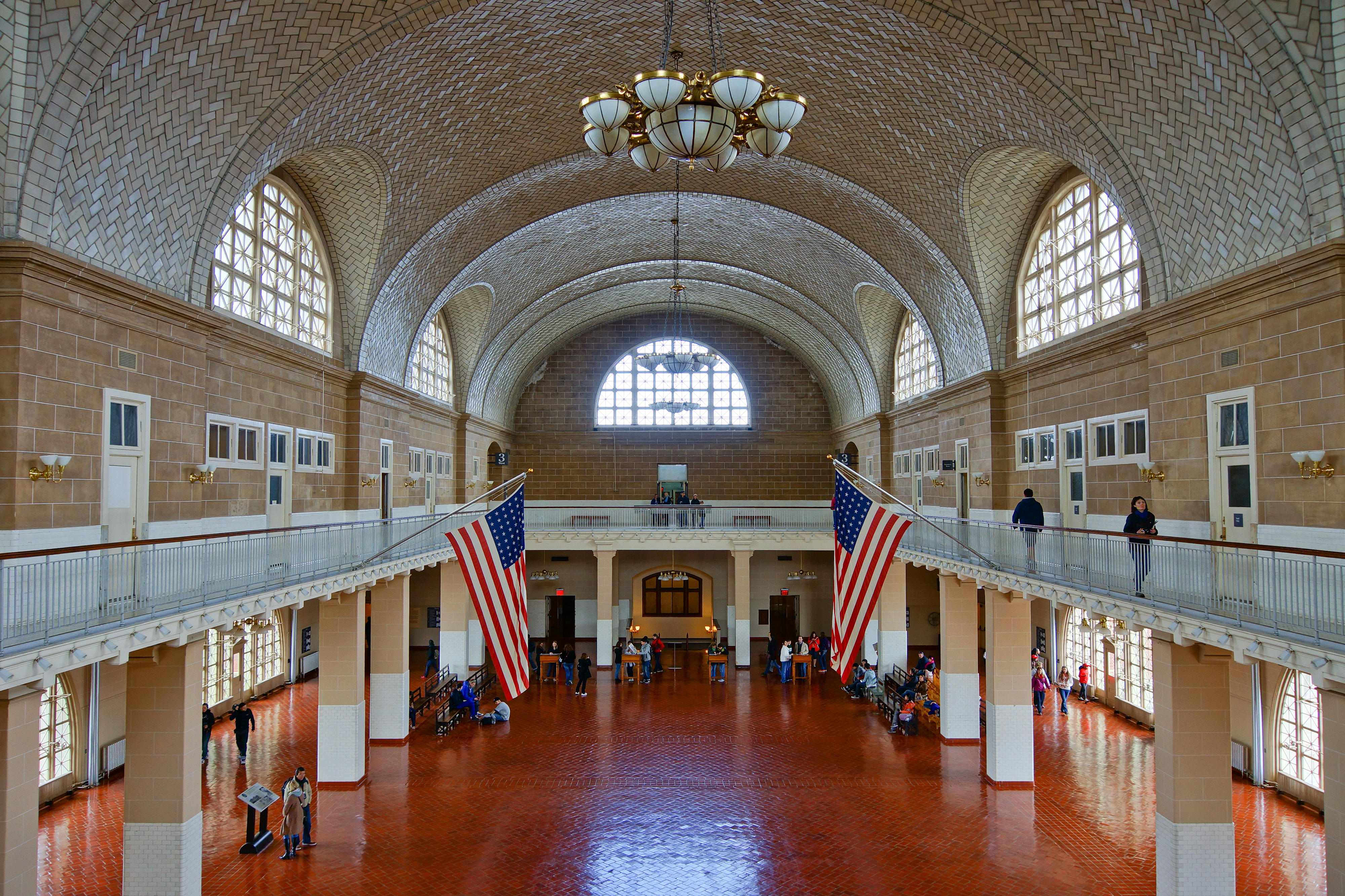
That contrast matters. It reminds us that immigrant stories were never uniform. Some people were processed quickly, others faced suspicion, family separation, or long legal hurdles. The same national system could feel like opportunity to one group and rejection to another.
For readers interested in narrative history, this is where the subject becomes personal. Maps, manifests, inspection rooms, and hearing boards turned abstract policy into lived experience. Many of the best family immigration stories begin not with a law in Washington, but with a line at a port, a medical exam, or a decision at a desk.
Which laws most changed U.S. immigration policy?
The most important legal shifts were the ones that changed who could enter, in what numbers, and under what logic. The move from looser migration patterns to targeted exclusion was one of the biggest breaks in the national story.
The Library of Congress notes that the Chinese Exclusion Act virtually ended Chinese immigration for nearly a century, making it a major landmark in the history of race based restriction. Later, the Office of the Historian summary of the Immigration Act of 1924 explains that the law set visas at 2 percent of each nationality's U.S. population based on the 1890 census and completely excluded immigrants from Asia. That formula favored older immigrant source countries in Western Europe and sharply limited newer flows from Southern and Eastern Europe.
Those laws still matter because they reveal a pattern that continues into modern debates over legal immigration in the United States: policy is never only about border control. It is also about national identity, labor markets, security concerns, and ideas about which forms of migration are considered desirable.
What does immigration history explain about the country today?
The clearest lesson is that the United States has repeatedly depended on newcomers while arguing over them at the same time. That tension appears in nearly every era. Economic growth often pulled migrants in, while politics tried to sort, slow, or redirect that flow.
History also explains why current U.S. immigration statistics matter so much in public debate. Numbers about border encounters, asylum, family sponsorship, or employment visas are easier to interpret when you know that the country has long moved between expansion and restriction. The categories change, but the underlying questions stay familiar: Who belongs, what skills are needed, which families can reunite, and how should the state balance openness with control?
For professionals and petitioners, that perspective is practical. Modern visa cases, especially employment and national interest filings, are judged inside a system shaped by decades of administrative layering. A persuasive plan is not just a formality. It shows how a person or business fits the policy goals that U.S. immigration has gradually prioritized, including innovation, investment, job creation, and public benefit.
Why does this history matter for modern visa strategy?
Immigration history matters today because it shows that successful cases align with the logic of the period in which they are filed. In earlier eras, labor demand or family networks often opened doors informally. In the modern system, the case usually rises or falls on documentation, consistency, and a clear match between the applicant and the visa category.
That is one reason firms and applicants invest in stronger planning. Whether the goal is an E 2 business case, an EB 2 NIW strategy, or a professional plan for another pathway, the underlying task is similar: translate a real project into language the government can evaluate. Seeder Visa Solutions works in exactly that space, combining business planning, professional positioning, and process efficiency to improve the quality of immigration documentation.
The broad lesson from the past is simple: migration to the United States has always been shaped by both human ambition and institutional filters. The stories change, the routes change, and the rules change, but the need to connect a person's goals to the country's legal framework has remained constant.
U.S. immigration history is the story of repeated movement, adaptation, and rule changes, not one single national tradition. For readers who want a clear starting point, this guide explains the main waves of arrivals, why people came, how laws changed, and why those shifts still matter now. It is especially useful for anyone trying to understand the broader context behind modern immigration debates, policy design, and case preparation.
That long view also helps explain why immigration paperwork in the United States has become so detailed. At Seeder Visa Solutions, that historical perspective matters because strong visa documentation is easier to build when you understand how economic need, national security, family reunification, and merit based arguments have shaped U.S. policy over time.
Key takeaways from the U.S. immigration story
- There was never just one wave. The country received different groups at different times, from early Europeans to later arrivals from Asia, Latin America, the Caribbean, Africa, and the Middle East.
- People usually moved for a mix of reasons. Famine, war, persecution, wages, land, family ties, and business opportunities often overlapped.
- Policy changed from openness to restriction, then to new selection systems. The shift from few federal controls to quotas and later reforms shaped who could enter.
- Ports mattered. Ellis Island and Angel Island were not just buildings, they reflected how the nation welcomed, screened, or excluded newcomers.
- History still shapes the present. The U.S. Census Bureau said net international migration to the United States reached 2.8 million between 2023 and 2024, showing that migration remains a major force in national growth and planning.
When did the United States start receiving immigrants?
The United States has received immigrants since its earliest national years, but the first decades looked very different from the system people know today. According to the USCIS overview of immigration administration, the early republic generally encouraged immigration and operated with far fewer federal controls than later periods.
That does not mean the system was equal. Early citizenship rules favored some groups over others, and Native peoples, enslaved Africans, and many nonwhite newcomers were treated through entirely different legal frameworks. So when people ask, "When was the first immigration?" the better answer is that migration to North America began long before the modern United States, but federal immigration regulation came later and gradually became stricter.
If you are exploring the wider topic of immigration in the United States of America, this is the first idea to keep in mind: the country was built through mobility, yet it has repeatedly argued over who should be admitted and on what terms.
Why did major immigrant waves happen?
Most large migration waves happened because pressure at home met opportunity in the United States. People rarely moved for one reason alone. A family might leave because of crop failure, political instability, religious discrimination, and the chance of industrial work, all at the same time.
The Library of Congress overview of immigration in the late 1800s notes that the Irish arrived in large numbers during the famine years, while news of the California Gold Rush drew many Chinese migrants to the West Coast. That pattern helps explain why the history of Irish settlement and the history of Chinese migration often appear in separate conversations, even though both were central to the making of the country.
Later waves followed the same basic logic with different origins. Southern and Eastern Europeans came as industrial cities expanded. In the 20th and 21st centuries, arrivals from Mexico, Haiti, and many Muslim majority countries were shaped by labor demand, family networks, upheaval, and changing law. That is why modern discussions about Mexican, Haitian, or Muslim immigration make the most sense when placed inside a longer historical timeline instead of treated as isolated episodes.
Which periods most changed the nation?
Several turning points reshaped the immigrant population and the rules around it. The table below gives a practical timeline that readers can use as a map.
| Period | What changed | Why it mattered |
|---|---|---|
| Early republic to mid 1800s | Relatively few federal restrictions | Migration expanded with westward growth, trade, and labor demand |
| 1840s to late 1800s | Large arrivals from Ireland, Germany, and China | Famine, revolution, and gold rush opportunities accelerated movement |
| 1880s to 1920s | More federal control and inspection | The government built systems to screen, document, and limit entry |
| 1920s | Quota laws and Asian exclusion tightened | National origins rules favored older European source countries |
| Late 20th century to present | More diverse global inflows | Family, employment, humanitarian, and business pathways gained importance |
This framework also helps readers connect history to current Census migration estimates, which show that international movement remains a live demographic force, not just a chapter in a textbook.
How did Ellis Island and Angel Island shape immigrant memory?
These entry points became symbols because they turned immigration into a visible public process. Ellis Island is often remembered as a gateway of hope, while Angel Island is more closely associated with detention, questioning, and exclusion, especially for Asian migrants.
That contrast matters. It reminds us that immigrant stories were never uniform. Some people were processed quickly, others faced suspicion, family separation, or long legal hurdles. The same national system could feel like opportunity to one group and rejection to another.
For readers interested in narrative history, this is where the subject becomes personal. Maps, manifests, inspection rooms, and hearing boards turned abstract policy into lived experience. Many of the best family immigration stories begin not with a law in Washington, but with a line at a port, a medical exam, or a decision at a desk.
Which laws most changed U.S. immigration policy?
The most important legal shifts were the ones that changed who could enter, in what numbers, and under what logic. The move from looser migration patterns to targeted exclusion was one of the biggest breaks in the national story.
The Library of Congress notes that the Chinese Exclusion Act virtually ended Chinese immigration for nearly a century, making it a major landmark in the history of race based restriction. Later, the Office of the Historian summary of the Immigration Act of 1924 explains that the law set visas at 2 percent of each nationality's U.S. population based on the 1890 census and completely excluded immigrants from Asia. That formula favored older immigrant source countries in Western Europe and sharply limited newer flows from Southern and Eastern Europe.
Those laws still matter because they reveal a pattern that continues into modern debates over legal immigration in the United States: policy is never only about border control. It is also about national identity, labor markets, security concerns, and ideas about which forms of migration are considered desirable.
What does immigration history explain about the country today?
The clearest lesson is that the United States has repeatedly depended on newcomers while arguing over them at the same time. That tension appears in nearly every era. Economic growth often pulled migrants in, while politics tried to sort, slow, or redirect that flow.
History also explains why current U.S. immigration statistics matter so much in public debate. Numbers about border encounters, asylum, family sponsorship, or employment visas are easier to interpret when you know that the country has long moved between expansion and restriction. The categories change, but the underlying questions stay familiar: Who belongs, what skills are needed, which families can reunite, and how should the state balance openness with control?
For professionals and petitioners, that perspective is practical. Modern visa cases, especially employment and national interest filings, are judged inside a system shaped by decades of administrative layering. A persuasive plan is not just a formality. It shows how a person or business fits the policy goals that U.S. immigration has gradually prioritized, including innovation, investment, job creation, and public benefit.
Why does this history matter for modern visa strategy?
Immigration history matters today because it shows that successful cases align with the logic of the period in which they are filed. In earlier eras, labor demand or family networks often opened doors informally. In the modern system, the case usually rises or falls on documentation, consistency, and a clear match between the applicant and the visa category.
That is one reason firms and applicants invest in stronger planning. Whether the goal is an E 2 business case, an EB 2 NIW strategy, or a professional plan for another pathway, the underlying task is similar: translate a real project into language the government can evaluate. Seeder Visa Solutions works in exactly that space, combining business planning, professional positioning, and process efficiency to improve the quality of immigration documentation.
The broad lesson from the past is simple: migration to the United States has always been shaped by both human ambition and institutional filters. The stories change, the routes change, and the rules change, but the need to connect a person's goals to the country's legal framework has remained constant.
U.S. immigration history is the story of repeated movement, adaptation, and rule changes, not one single national tradition. For readers who want a clear starting point, this guide explains the main waves of arrivals, why people came, how laws changed, and why those shifts still matter now. It is especially useful for anyone trying to understand the broader context behind modern immigration debates, policy design, and case preparation.
That long view also helps explain why immigration paperwork in the United States has become so detailed. At Seeder Visa Solutions, that historical perspective matters because strong visa documentation is easier to build when you understand how economic need, national security, family reunification, and merit based arguments have shaped U.S. policy over time.
Key takeaways from the U.S. immigration story
- There was never just one wave. The country received different groups at different times, from early Europeans to later arrivals from Asia, Latin America, the Caribbean, Africa, and the Middle East.
- People usually moved for a mix of reasons. Famine, war, persecution, wages, land, family ties, and business opportunities often overlapped.
- Policy changed from openness to restriction, then to new selection systems. The shift from few federal controls to quotas and later reforms shaped who could enter.
- Ports mattered. Ellis Island and Angel Island were not just buildings, they reflected how the nation welcomed, screened, or excluded newcomers.
- History still shapes the present. The U.S. Census Bureau said net international migration to the United States reached 2.8 million between 2023 and 2024, showing that migration remains a major force in national growth and planning.
When did the United States start receiving immigrants?
The United States has received immigrants since its earliest national years, but the first decades looked very different from the system people know today. According to the USCIS overview of immigration administration, the early republic generally encouraged immigration and operated with far fewer federal controls than later periods.
That does not mean the system was equal. Early citizenship rules favored some groups over others, and Native peoples, enslaved Africans, and many nonwhite newcomers were treated through entirely different legal frameworks. So when people ask, "When was the first immigration?" the better answer is that migration to North America began long before the modern United States, but federal immigration regulation came later and gradually became stricter.
If you are exploring the wider topic of immigration in the United States of America, this is the first idea to keep in mind: the country was built through mobility, yet it has repeatedly argued over who should be admitted and on what terms.
Why did major immigrant waves happen?
Most large migration waves happened because pressure at home met opportunity in the United States. People rarely moved for one reason alone. A family might leave because of crop failure, political instability, religious discrimination, and the chance of industrial work, all at the same time.
The Library of Congress overview of immigration in the late 1800s notes that the Irish arrived in large numbers during the famine years, while news of the California Gold Rush drew many Chinese migrants to the West Coast. That pattern helps explain why the history of Irish settlement and the history of Chinese migration often appear in separate conversations, even though both were central to the making of the country.
Later waves followed the same basic logic with different origins. Southern and Eastern Europeans came as industrial cities expanded. In the 20th and 21st centuries, arrivals from Mexico, Haiti, and many Muslim majority countries were shaped by labor demand, family networks, upheaval, and changing law. That is why modern discussions about Mexican, Haitian, or Muslim immigration make the most sense when placed inside a longer historical timeline instead of treated as isolated episodes.
Which periods most changed the nation?
Several turning points reshaped the immigrant population and the rules around it. The table below gives a practical timeline that readers can use as a map.
| Period | What changed | Why it mattered |
|---|---|---|
| Early republic to mid 1800s | Relatively few federal restrictions | Migration expanded with westward growth, trade, and labor demand |
| 1840s to late 1800s | Large arrivals from Ireland, Germany, and China | Famine, revolution, and gold rush opportunities accelerated movement |
| 1880s to 1920s | More federal control and inspection | The government built systems to screen, document, and limit entry |
| 1920s | Quota laws and Asian exclusion tightened | National origins rules favored older European source countries |
| Late 20th century to present | More diverse global inflows | Family, employment, humanitarian, and business pathways gained importance |
This framework also helps readers connect history to current Census migration estimates, which show that international movement remains a live demographic force, not just a chapter in a textbook.
How did Ellis Island and Angel Island shape immigrant memory?
These entry points became symbols because they turned immigration into a visible public process. Ellis Island is often remembered as a gateway of hope, while Angel Island is more closely associated with detention, questioning, and exclusion, especially for Asian migrants.
That contrast matters. It reminds us that immigrant stories were never uniform. Some people were processed quickly, others faced suspicion, family separation, or long legal hurdles. The same national system could feel like opportunity to one group and rejection to another.
For readers interested in narrative history, this is where the subject becomes personal. Maps, manifests, inspection rooms, and hearing boards turned abstract policy into lived experience. Many of the best family immigration stories begin not with a law in Washington, but with a line at a port, a medical exam, or a decision at a desk.
Which laws most changed U.S. immigration policy?
The most important legal shifts were the ones that changed who could enter, in what numbers, and under what logic. The move from looser migration patterns to targeted exclusion was one of the biggest breaks in the national story.
The Library of Congress notes that the Chinese Exclusion Act virtually ended Chinese immigration for nearly a century, making it a major landmark in the history of race based restriction. Later, the Office of the Historian summary of the Immigration Act of 1924 explains that the law set visas at 2 percent of each nationality's U.S. population based on the 1890 census and completely excluded immigrants from Asia. That formula favored older immigrant source countries in Western Europe and sharply limited newer flows from Southern and Eastern Europe.
Those laws still matter because they reveal a pattern that continues into modern debates over legal immigration in the United States: policy is never only about border control. It is also about national identity, labor markets, security concerns, and ideas about which forms of migration are considered desirable.
What does immigration history explain about the country today?
The clearest lesson is that the United States has repeatedly depended on newcomers while arguing over them at the same time. That tension appears in nearly every era. Economic growth often pulled migrants in, while politics tried to sort, slow, or redirect that flow.
History also explains why current U.S. immigration statistics matter so much in public debate. Numbers about border encounters, asylum, family sponsorship, or employment visas are easier to interpret when you know that the country has long moved between expansion and restriction. The categories change, but the underlying questions stay familiar: Who belongs, what skills are needed, which families can reunite, and how should the state balance openness with control?
For professionals and petitioners, that perspective is practical. Modern visa cases, especially employment and national interest filings, are judged inside a system shaped by decades of administrative layering. A persuasive plan is not just a formality. It shows how a person or business fits the policy goals that U.S. immigration has gradually prioritized, including innovation, investment, job creation, and public benefit.
Why does this history matter for modern visa strategy?
Immigration history matters today because it shows that successful cases align with the logic of the period in which they are filed. In earlier eras, labor demand or family networks often opened doors informally. In the modern system, the case usually rises or falls on documentation, consistency, and a clear match between the applicant and the visa category.
That is one reason firms and applicants invest in stronger planning. Whether the goal is an E 2 business case, an EB 2 NIW strategy, or a professional plan for another pathway, the underlying task is similar: translate a real project into language the government can evaluate. Seeder Visa Solutions works in exactly that space, combining business planning, professional positioning, and process efficiency to improve the quality of immigration documentation.
The broad lesson from the past is simple: migration to the United States has always been shaped by both human ambition and institutional filters. The stories change, the routes change, and the rules change, but the need to connect a person's goals to the country's legal framework has remained constant.